We may earn a commission when you buy through our links, at no extra cost to you.
How to Choose The Best Kayak Racks for Toyota Hilux
I’ll be honest, the first time I strapped a kayak to the roof of a Hilux, I thought the whole contraption was going to fly off halfway down the highway. There’s this jittery feeling in your gut when you glance in the rear-view mirror and see the bow wobbling like some stubborn goat refusing to stay put. Kayaks aren’t exactly feathers, they catch wind like a kite, and if you don’t secure them properly… well, let’s just say you’ll be giving a free performance for traffic behind you.
The Hilux is not just any truck
A Toyota Hilux is basically built to haul bricks, sand, sheep, whatever you want. But kayaks? That’s a different beast. Because the roof is tall, not as sleek as some crossovers, and the tray in the back… yes, you could throw the kayak in there if you don’t mind scratching fiberglass to death. Most people want racks. Racks make it easier, safer, less embarrassing.
Some Hilux models come with factory rails. Others don’t. Which means half the time you’re trying to figure out crossbar widths, load ratings, clamp styles, and then you start swearing because one company says their rack fits but then you look closer and… nope. Doesn’t line up.
Weight ratings and why they matter more than you think
A lot of folks underestimate how heavy kayaks actually get. Sure, a little sit-on-top might weigh 20kg, you can toss it up there with one arm if you’re feeling macho. But touring kayaks? Sea kayaks? Fishing kayaks with all the gear mounts? Those monsters hit 35 to 50kg easy. Add wind resistance at 100km/h and suddenly your rack is under stress it wasn’t designed for.
The Hilux roof load limit sits around 75–100kg depending on the year and trim. That includes the racks themselves plus the kayak. So you can’t just throw two heavy ocean kayaks up there without thinking. I’ve seen people bend their gutters, literally warp the mounts, because they assumed the truck could handle more. Don’t be that person.
Styles of racks and the constant debate
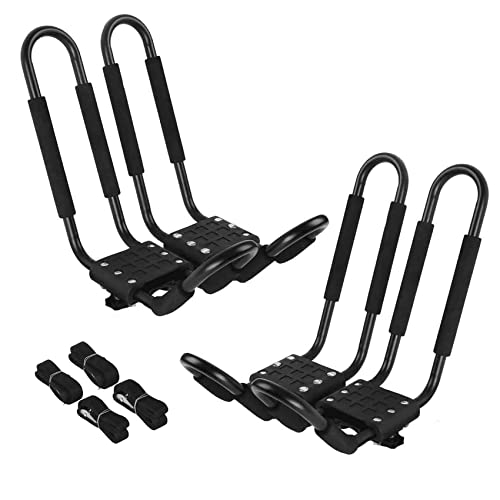
This is where people get divided. There’s the J-cradle style, which hugs the kayak on its side like a stubborn hug, freeing up more space on the roof. Great if you want to carry two boats. But lifting a kayak onto a J-cradle on a Hilux? Unless you’re tall or carrying a step stool, you’re basically wrestling gravity.
Then there’s the saddle system, flat mounts where the kayak sits right-side-up or upside-down. Easier to load, less awkward, but you only fit one kayak most times. Some swear by stackers, vertical poles you strap boats against, though I don’t trust them on high winds. Maybe fine on a Subaru Outback, less so on a tall Hilux.
A personal misadventure
One summer I used cheap clamp-style racks I bought second-hand. Big mistake. Halfway to the river, one side started sliding. I had to pull over, sweating bullets, re-tie the whole mess on the shoulder while semi-trucks blasted past. Learned quick: always check the clamping system. Hilux roofs are wide and tough, but cheap racks bend, and once the rubber pads peel, the metal digs into your paint. Not a good look.
Brands that actually fit the Hilux
Without sugarcoating: Rhino-Rack is probably the most popular in Australia. Solid, fits Hilux well, load tested properly. Thule too, but pricier. Yakima has options, though sometimes the mounting kits are a pain. Statistics I found said Rhino-Rack holds about 40% market share for roof racks in Australia, which doesn’t shock me at all given how many utes you see rolling around with their gear.
The thing to note is, don’t just buy a kayak rack on its own. You need proper crossbars first. Hilux crossbars usually span 126–137cm depending on year. If you get too narrow, the kayak overhangs dangerously. Too wide and you look like you’re trying to fly with wings.
Straps, pads, and the little details everyone forgets
People obsess over the rack itself, but the straps are what keep your kayak alive. Ratchet straps? Overkill, can crush the hull. Cam buckle straps are better, quick to tighten without damaging. Bow and stern lines—yes, they look fussy, but they stop the front of the kayak from bouncing in headwinds. Trust me, skip them once and you’ll regret it.
Also, foam pads or rubber cradles matter. A naked metal bar against fiberglass is like sandpaper over time. You’ll start with a glossy boat, end with scratches that look like a cat went wild.
So, what’s the “best”?
Honestly, “best” is a tricky word. If you’ve only got one lightweight kayak, a saddle or flat cradle with good padding might be simplest. If you haul two fishing kayaks, you’ll need heavy-duty J-cradles and a step stool to load them. For weekend warriors, Rhino-Rack or Thule with proper crossbars will feel like peace of mind.
But if you’re on a budget, even a decent no-name set can work—as long as you respect weight ratings, use good straps, and check bolts before every long trip. Don’t ignore those tiny things. Little rattles at 80km/h turn into full disasters at 110.




 Best 5 Kayak Bed Racks for Toyota Tacoma
 Best 5 Kayak Racks for SUV for Single Loader
 Best 5 Kayak Racks for Buick Regal