We may earn a commission when you buy through our links, at no extra cost to you.
Kayaking and phones have a complicated relationship. The water wants your phone. You want your phone. A good waterproof phone case is what stands between a great day on the water and a $1,000 paperweight at the bottom of a river. Whether you’re shooting video on a calm lake, navigating on a coastal paddle, or just keeping your emergency contact accessible during a whitewater run, the right waterproof pouch does more work than most paddlers realize. Out of everything tested and reviewed across the kayaking community, the Hiearcool IPX8 Waterproof Phone Pouch earns the top spot — over 109,000 Amazon reviews, a 4.6-star average, and a 2-pack price that makes it the obvious default choice for most kayakers.
Top pickBest Overall — #1 Best Seller 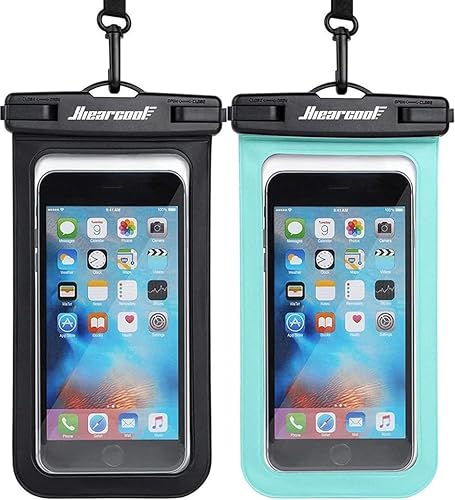
Hiearcool Waterproof Phone Pouch IPX8
When over 109,000 Amazon reviewers agree on something, it deserves the top spot.
Check price on Amazon →
Runner-upBest Premium Pick 
Pelican Marine IP68 Waterproof Floating Pouch XL
Pelican has built its reputation on protecting what matters in the harshest conditions — military, photography, first responders.
Check price on Amazon →
Also greatBest Floating Budget Pick 
UNBREAKcable Floating Waterproof Phone Pouch 2 Pack
If you want the floating safety feature without paying Pelican prices, UNBREAKcable delivers it in a 2-pack at a fraction of the cost.
Check price on Amazon →
How to Choose the Best Waterproof Phone Case for Kayaking
Not all waterproof phone cases are built for kayaking specifically, and the differences matter more on the water than anywhere else.
IPX8 vs IP68 — What the Ratings Actually Mean
Both IPX8 and IP68 are waterproof ratings but they are not identical. IPX8 certifies waterproofing to a manufacturer-specified depth — most pouches claim 30 meters (100 feet). IP68 is a more standardized certification with fixed depth and duration. For kayaking, both provide more than adequate protection for capsize scenarios. What matters most is seal quality and whether the pouch is properly closed at submersion.
Floating vs Non-Floating: A Real Decision for Open Water
On a calm river or lake close to shore, a non-floating pouch that sinks is often retrievable. On open coastal water or in fast-moving water, a sinking phone is a lost phone. Floating cases — the Pelican Marine and UNBREAKcable in this list — keep your phone on the surface even if the lanyard breaks.
Touchscreen Performance Under Wet Conditions
Touchscreen responsiveness varies dramatically between pouch materials. Cheaper PVC windows often make touchscreen use frustrating. TPU material, used by Hiearcool and Pelican, provides significantly better touch sensitivity. Face ID typically works through good TPU windows; fingerprint Touch ID almost never works through any pouch material.
Size: Fitting Your Phone and Its Case
Most standard waterproof pouches fit phones up to 7 inches without a case. If you keep a thick protective case on your phone year-round, measure your phone-with-case dimensions before buying. The Hiearcool Case-Friendly pouch at 8.9 inches is specifically designed to solve this problem.
Lanyard Quality Matters More Than You Think
The lanyard is your safety line for the phone on the water. Look for nylon construction rated to at least 10–20kg of tension. Carabiner-compatible lanyards like Pelican’s are ideal for kayakers because they clip directly to PFD D-rings, keeping the phone secure without swinging around your neck on rough stretches.



 Best 5 Kayak Anchor and Push Poles
 Best 6 Kayak Paddles Under $200
 Best 5 Kayak Anchor Cleats