We may earn a commission when you buy through our links, at no extra cost to you.
Why Should I opt for a Bow Mount Trolling Motor?
This question is valid because as compared to regular motors, trolling motors are costlier and you sure want your money’s worth, right? Now, to make a wise investment, you must consider some important aspects when shopping for a trolling motor. They come with a host of advanced features for serving as a better option than the standard motors.
1. Smooth Steering
Boats that are easy to steer can make your fishing expeditions fun. Now, another reason for the raging popularity of bow mount trolling motors is owed to their smooth steering features. Only the fishermen should learn about how the motor functions for sailing smoothly.
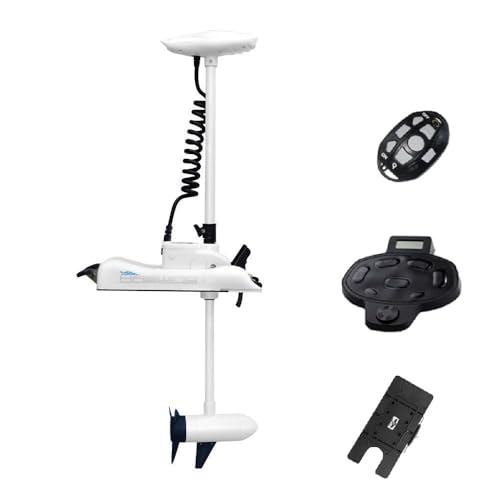
Owing to technology, the newer trolling boat varieties can be operated via hand and foot. Though, many fishermen like to pedal their boats using foot because they find it more convenient to do so. They can easily control their boats if they paddle their boats via foot too.
Nevertheless, if you prefer paddling by hand than the foot, then fret not, because you can avail several bow mount trolling motors that offer both options of hand and foot paddling; simply choose your preferred method to steer your boat in the given direction.
2. Easy-to-install
Setting up a bow trolling motor is fairly easy. Not much time and effort is needed. So, even if you’re not tech-savvy, be assured that you can install them with ease.
3. Quiet Operation
Trolling motors are popular among the angler community because they glide over the waters in silence. Also, they do not cause any vibrations that could drive away from the fishes. Besides, they are fitted with advanced technology for propelling the boat without much ado and sans any noise.
5 Factors to Consider While Selecting The Right Bow Mount Trolling Motor
Now, among the various available options in trolling motors, finding the ones that are best suited for your requirements may not be easy. However, you should consider various aspects to make the right selection. Here, we have listed the five main features to consider.
1. Battery Requirements
The batteries for running your trolling motor determine the battery life, power, and speed of the motor. Take into account the thrust and boat size, to know the requisite battery volts. Normally, boats that span 12 feet run well on 12v batteries. Though, the bigger the boat, the greater volts are needed for its operation.
In some cases, anglers opt for 24v or 36v batteries. The greater the voltage, the longer is the span of the battery. Additionally, batteries with higher voltage increase the speed and power, facilitating your boat to ride even in turbulent weather.
2. Thrust Power
The thrust determines the power of your troller and how easy will it be for your boat to ride through the water currents and windy conditions.
To determine how much thrust your troller should have, you must consider the weight of your boat – including your gear and the anglers aboard.
The general rule is 2 pounds of thrust for every 100 pounds of boat weight. However, if you are fishing in waters with strong currents, or carrying many people aboard, adding extra thrust helps to ensure a smooth ride.
3. Shaft Length
For your boat to perform efficiently, choosing the right shaft length is important. If the shaft is overly long, then your boat will not sail smoothly in shallow waters. More so, if your propeller is not fitted properly, your boat will start to drag over the waters.
Conversely, shorter shafts cause cavitation and sucking of air. As a result, your boat starts to make noise and drags on water. Anglers must try to avoid such situations.
4. Means of Operation
Boatmen prefer to operate their boats using the hands-free option because they can, then, enjoy greater flexibility and control. Most trolling motors are controlled by hand. Even so, the latest motor models contain hand and foot pedals, thereby, giving the user the flexibility to operate the boat as per their preferences.
5. Requisite Voltage
The required voltage for different types of motors tends to vary. So always check the voltage requirements for your boat. The voltage requirement varies according to the sizes of boats.
In cases of large-sized fishing boats, they need 24v to 36v motors to run them. Alternatively, 12v suffices to power smaller boats – such as kayaks and canoes.Toggle panel: Yoast SEO



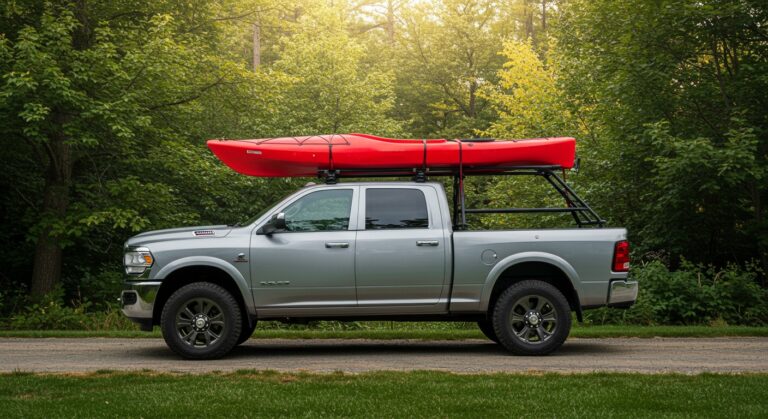 Best Kayak Racks for RAM 2500
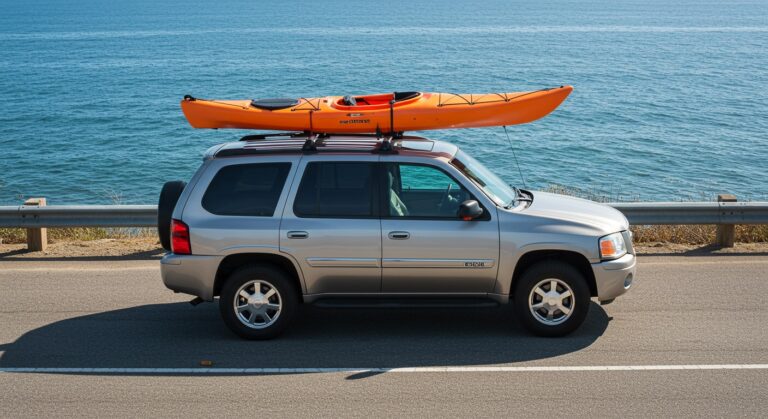 Best Kayak Racks for GMC Envoy