We may earn a commission when you buy through our links, at no extra cost to you.
Picking the best kayak cooler ain’t just about tossin’ a box on your boat and hopin’ it stays cold. You’re out on the water for hours—sometimes the whole dang day—and if your drinks warm up or your bait goes bad, that trip’s kinda ruined. A lotta folks think any cooler’ll do, but kayaks got weird shapes, limited space, and you can’t just grab stuff like on dry land.
So if you wanna keep your stuff cold, dry, and easy to reach without flippin’ the whole yak, you gotta know what actually works. Lotta stuff out there looks cool but don’t hold ice or tips over soon as you hit a wave. This guide breaks down what really matters—ice retention, cooler size, how it ties down, and which ones won’t slide around or leak like crazy. You’ll know what to look for next time you’re buying, instead of guessin’ wrong again.
How to Choose the Best Kayak Cooler
Finding a kayak cooler that actually works without being a pain ain’t easy. Some say size is all that matters. It’s not. You gotta think more than just “will it fit.” There’s stuff like ice retention, shape, waterproofing, and how it clips down so it don’t float away.
Size Does Matter… But Not Like You Think
Yeah, bigger might hold more drinks or fish, but if it don’t fit in your sit-on-top kayak or fishing kayak, what’s the point? Look at your kayak tankwell dimensions before you buy. Most standard kayak coolers are between 12 and 24 quarts.
A 20-quart cooler can hold around 16 cans plus ice. But that weight adds up. Ice + gear + snacks = heavy. If you ain’t got a strong back or a buddy to help lift, stick under 16 quarts. Don’t forget the cooler width too—many kayaks can’t handle wide boxes.
Soft-Sided vs Hard-Sided Coolers
Some folks swear by soft coolers ’cause they weigh less and squish into tight places. True. But they usually don’t hold ice as long. Average soft kayak coolers keep stuff cold for 12–24 hours max.
Hard-sided coolers, on the other hand, built like tanks. You’ll get 2–3 days ice life if you ain’t opening it every 10 mins. Brands like Yeti, Engel, and Pelican offer kayak-ready models. Hard ones often double as extra seat too, just check it ain’t too slippery.
Ice Retention Ain’t Always What They Say
You seen the ads: “Keeps ice for 5 days!” Yeah right—maybe in a lab. Real use on the river, sun beaming down, you’ll be lucky with 48 hours.
Test by pre-chilling the cooler before you fill it. Use block ice not cubed—it melt slower. Some smart folks even freeze water bottles instead of using loose ice.
Insulation thickness varies. 1.5 inches wall usually means good hold time. Anything less than 1 inch and you’re basically just packing a lunchbox.
Attachment & Stability Is Huge
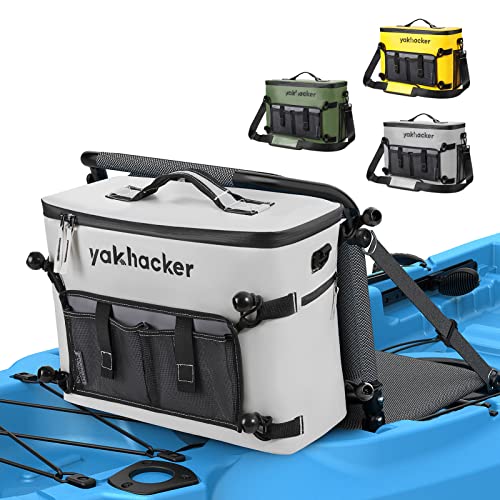
Cooler flying off your kayak = worst-case. Get something with bungee cord anchor points, D-rings, or molded tie-down slots.
Some kayak-specific coolers (like those by Hobie or Perception) designed with latches or straps made just for kayak use. Velcro straps ain’t it—they wear out fast with sun + saltwater.
Waterproof and Leakproof Ain’t the Same
You might think if a cooler is waterproof, it don’t leak. Not always. Waterproof zippers can keep rain out but if the cooler seams suck, melted ice gonna leak from bottom.
Look for RF-welded seams, not stitched. The lid seal also matters—cheap coolers don’t have gasket seals, and that’s how cold air slips out fast.
Shape + Handle Type Can Make or Break It
Taller ain’t better. Low-profile coolers sit better in kayak hulls. A tall cooler tips easy, especially in narrower sit-inside kayaks.
Handles—avoid rigid plastic ones that jab your knees. Side-mounted flexible handles or webbing loops are way more comfy and stow better.
You Gonna Fish or Chill?
If you’re kayak fishing, look for coolers with rod holders or built-in bait trays. Some have mesh pockets too, for stashing pliers or gloves.
If it’s just for drinks and sandwiches, no need for extras—just focus on weight, shape, and ice time. But if you’re out 8+ hours, you want a cooler that don’t mess up halfway.
Material Durability
Rotomolded coolers last longest—some even bear-proof (not that you’ll meet a bear on the water). But they ain’t light. If you dragging the cooler on rocks or dock, rotomolded better than soft nylon bags.
Look for UV-resistant outer shell too. Cheaper plastics fade, crack, and warp in the sun within 1 season.
How Much It Gonna Cost?
Decent kayak coolers run $60 to $200 depending on size and brand. Soft coolers are cheaper but won’t last as long. Don’t cheap out if you paddle in summer heat—you’ll end up drinking warm soda and soggy sandwiches.
Final Few Things to Think About
Color matters. White reflects heat better. Black or navy gets hot fast, ice melts quicker. Also avoid coolers with metal parts if you paddle saltwater—stainless steel or plastic hardware lasts longer.
Last thing—don’t just read product descriptions. Find actual kayak forums or Reddit threads where people post real pics and complaints. That’s where you learn the truth.
You’ll thank yourself when you still got cold beer by hour six, while your buddy’s cooler turned into soup by lunch.
Pick smart. Chill smarter.



 Best 5 Waterproof Phone Cases for Kayaking
 Best 5 Kayak Anchor and Push Poles
 Best 6 Kayak Paddles Under $200