We may earn a commission when you buy through our links, at no extra cost to you.
The Dodge Charger is not the first car that comes to mind for kayak transport, but set it up right and it works surprisingly well. The broad sedan roof handles a kayak up to 13 feet cleanly, and at 57 inches of roof height it is one of the easiest cars to load solo. The catch is that the Charger has no factory roof rails — you need a naked-roof crossbar system fitted first, then any of these J-racks will mount straight to it.
Dodge Charger Kayak Rack Buying Guide
When I first told people I was using a Dodge Charger to haul kayaks, the reaction was usually raised eyebrows followed by mild concern. I get it — a muscle car is not the obvious choice for rooftop kayak carry. But after two seasons of using mine as a regular paddling car, it works better than you’d expect. The main thing standing between a Charger owner and clean rooftop kayak carry is understanding the platform’s one real constraint.
The One Thing You Need First: A Naked-Roof Crossbar System
The Dodge Charger has no factory roof rails. That means you cannot simply buy a J-rack and mount it — you need a naked-roof crossbar system first. Specifically, vehicle-specific crossbar feet that grip the door frame, paired with crossbars and a Thule or Yakima fit kit designed for the Charger. I used the Thule Evo Clamp system with a Charger-specific fit kit. Installation took about 45 minutes the first time and about 10 minutes every time after that. The crossbars feel genuinely solid with no flex or movement once locked down properly.
One important note: naked-roof crossbar systems apply clamping pressure to specific points on the door frame. Follow the torque specifications in the fit kit instructions carefully. Over-tightening can crack the door frame seal; under-tightening can allow movement. I torqued mine to spec with a proper torque wrench and had zero issues across two full seasons. Do not eyeball it.
The Charger’s 57-Inch Roof Height Is Actually an Advantage
Here is the thing nobody talks about when discussing the Charger as a kayak car: that low sedan roofline is your biggest advantage once you start loading. At 57 inches the Charger’s roof is significantly lower than most SUVs, crossovers, and trucks on this site. I can load my 12-foot recreational kayak onto the Charger solo without a step stool, without a loading ramp, and without any real strain. That is genuinely not possible on my friend’s Tahoe or my neighbour’s F-150.
That said, the sedan crossbar span is shorter than an SUV. Keep your kayak under 13 feet for a well-balanced carry with good overhang ratios front and rear. I’ve carried a 13-footer on mine and it was fine, but I would not go significantly longer without more crossbar span to work with.
J-Cradle Side-Carry: Non-Negotiable on a Sedan Roofline
On an SUV with a flat roofline, you can carry a kayak flat on saddle pads and the height addition is modest. On the Charger’s tapered sedan roofline, flat carry would add significant height and would look genuinely wrong on the car. J-cradle side-carry is the only appropriate method — it holds the kayak on its side, adds less height, and keeps the loaded profile clean from the rear. All five J-racks on this list use J-cradle side-carry geometry.
Strap Routing on a Charger: Where to Anchor
Bow and stern tie-down straps are non-negotiable — they keep your kayak on the car if something shifts at highway speed. On the Charger, the front tow hook under the bumper is the correct front anchor point. For the rear, I run the stern strap through the trunk opening to the trunk floor tie-down ring. It is a slightly awkward route the first time but becomes fast once you have done it a few times. The AA-Racks’ 16-foot ratchet straps are worth calling out specifically here because the Charger’s compact body needs more strap length than most people expect to reach good anchor points cleanly.
My Final Word on the Charger as a Kayak Car
Use a proper torque wrench on the crossbar fit kit. Install crossbars before you buy J-racks. Keep the kayak under 13 feet. Use J-cradle side-carry. Run proper bow and stern tie-down straps to the correct anchor points. Do all of that and the Charger is a surprisingly capable, comfortable, and enjoyable kayak transport vehicle. The 57-inch loading height alone makes it better for solo paddlers than most of the SUVs people default to. The fact that it also does 0-60 in under six seconds is just a bonus.



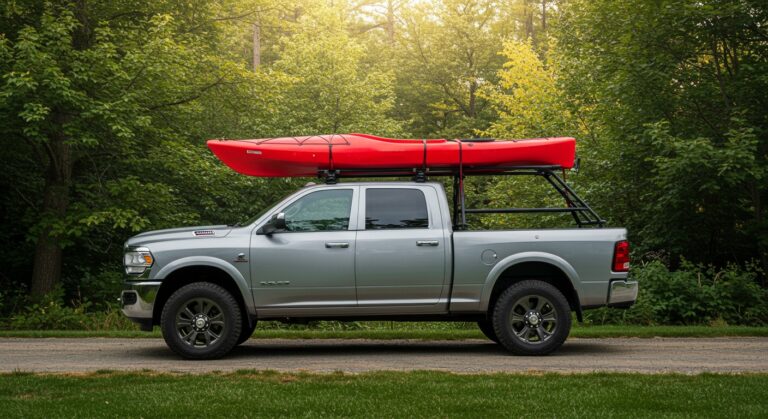 Best Kayak Racks for RAM 2500
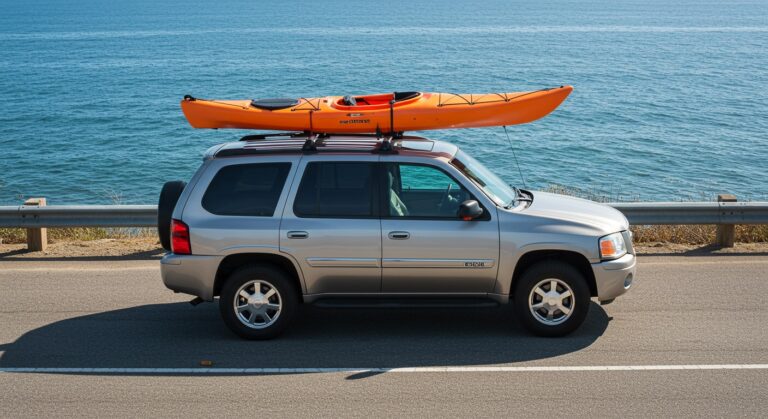 Best Kayak Racks for GMC Envoy