We may earn a commission when you buy through our links, at no extra cost to you.
Kayaking on rivers is an amazing experience in itself. There are so many twists and turns involved in river kayaking that it makes super exciting for newbies who have got tired of kayaking on Stillwater. Traversing along a river is a unique experience in itself. Most of the time, you will find the river a perfect place for fishing but things can change dramatically after a few turns. You could find yourself battling through whitewater. Yes, rivers are treacherous in nature and which is why you need to have a kayak that can withstand extreme conditions.
Choosing the right kayaks for paddling on rivers is not that easy. There are so many variants of rivers kayaks available in the market that it can make you feel confused. To help you out here have reviewed the best 7 rivers kayaks that money can buy –
How to Choose A River Kayak?
Finding the perfect river kayak for your next escapade is not as easy as it transpires to be. There are so many factors that you need to take into considerations that you might find it overwhelmingly difficult to pick a kayak that can meet all the requirements of river kayaking.
1. Kayak Length
The bigger, the better right? Well, not always my friend. In the world of river kayaking, you need to opt for shorter kayaks as they are easy to move around. Go for 8 to 12 feet of kayaks as they are easy to maneuver. 14 feet kayak may look tempting as they provide more space but they can be extremely hard to handle when things will start going wrong.
2. Kayak Width
Wider kayaks tend to offer more stability on the water which is good. But there is a catch to it and that is, wide river kayaks move a little low. So, in case, you are aiming for speed, you might feel disappointed.
3. Maneuverability
Maneuverability is a factor that you need to take into consideration while selecting a river kayak for your next trip. Rivers tend to have sharp turns and strong currents and which is why you need a kayak that can be maneuvered easily and effortlessly. Don’t rely on your kayaking skills too much because that can put you in a tough spot if your kayak is hard to move around.
Underwater objects like boulders and trees branches can make your river kayaking trip a nightmare. Since you will have little time to react and change the course of your kayak, you need to have a kayak that can be maneuvered easily without putting too much effort in the process.
4. Speed
Since the river will provide all the propulsion that you need, do you really need to invest in a kayak which has been developed to provide maximum speed? Well, rather than focusing too much on speed, you need to find a river kayak that focuses both on stability and performance.
5. Durability
No matter how long you have been kayaking, there is no way you can spot all the underwater objects while paddling in a river. Getting hit by underwater rocks or sticks is very much a part of river kayaking and there is no way you can avoid it. Things can get even messy if you run into the shallow ground. A good river kayak should be able to deal with such complex situations without getting hammered in the process.
6. Materials
A river kayak should ideally be made from PVC plastic or heavy-duty Polyethylene plastic. These two materials are known for proving the strength and they are extremely lightweight as well.
· PVC Plastic
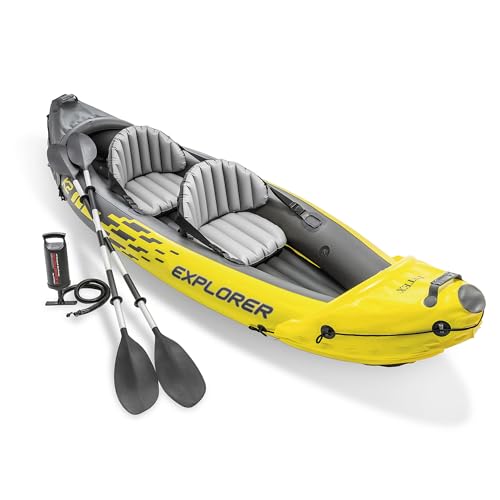
PVC plastic is primarily used to produce inflatable kayaks. However, inflatable kayaks made from PVC plastic are not as sturdy as their close counterpart – Polyethylene inflatable kayaks. But still, PVC inflatable kayaks are strong enough to withstand impacts from sharp underwater objects. The major advantage of PVC kayak is that they are extremely easy to repair and you don’t need to have any kind of specialized skills in order to repair a kayak. Moreover, PVC inflatable kayaks are extremely lightweight and thus can be moved around easily.
· Polyethylene
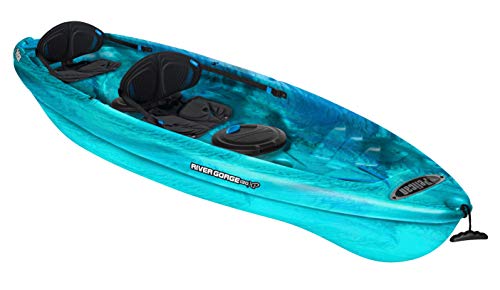
Polyethylene is widely used to make kayaks all over the world because Polyethylene can easily withstand abrasions and impacts from underwater objects. No matter how roughly they get treated, Polyethylene kayaks will last long. The main drawback of Polyethylene kayaks is that they are on the heavier side and repairing these kayaks demand advance level of skill sets.
Frequently asked questions
What kind of kayak works best on a river?
It depends on the river. Slow, flat rivers suit recreational and sit-on-top kayaks that are stable and easy to paddle. Moving water with riffles calls for something shorter and more maneuverable. Real rapids need a purpose-built whitewater kayak plus training. Match the boat to the water you will actually paddle most often.
Can I take a recreational kayak through rapids?
It is not a good idea beyond the gentlest riffles. Recreational kayaks are built for stability on calm water, not for turning quickly or shedding waves in rapids, and many lack the flotation needed if they swamp. If you want to run whitewater, take a lesson, paddle with experienced people, and use a kayak designed for it.
What are the biggest hazards on a river trip?
Strainers, such as fallen trees and brush that let water through but trap people and boats, are among the most dangerous. Low-head dams, cold water, and sudden rises after rain are others. Wear a life jacket, scout unfamiliar stretches from shore, check river levels before launching, and never paddle alone on moving water you do not know.




 Best Kayak Racks for RAM 2500