We may earn a commission when you buy through our links, at no extra cost to you.
Kayaking can be extremely enjoyable, relaxing, and fun-filled. However, as part of your preparations for your kayaking trips, having the right equipment is crucial when venturing out in the waters – to be on the safer side that is.
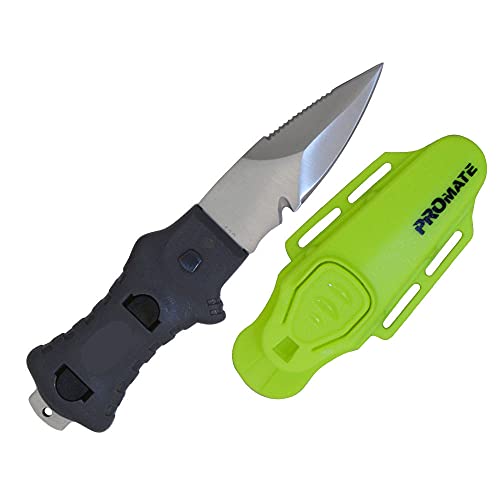
A kayak knife can prove to be a lifesaver at times and therefore, you should never ignore its importance. Whether for cleaning fish or cutting ropes or chopping wood, they serve a range of purposes.
Even so, not everybody has similar expectations when purchasing a knife. Thus, a wide variety of options in kayak knives are available. Also, we have prepared a buying guide to ensure you get a kayaking knife that suits your purposes best.
Kayak Knife Buying Factors
After studying the different uses of kayaking knives, let us delve into other important details about these essentials.
What sort of knife should you buy for kayaking?
As a knife guy, you require knives for hunting, camping, fishing, among other activities. However, you may want to consider the right knife for the activity you’re planning to indulge in, so let’s discuss those.
1. Fixed vis-a-vis Folding PFD Knife Blades
Under kayaking knives, you also have to choose between the fixed or folding blade varieties.
While some kayakers opine carrying a knife with a fixed blade, others may suggest a folding knife.
As compared to folding knives that are sleek, fixed blades are tougher and always ready – only draw from the sheath and you can start cutting. And if using a folding knife, you’ve to locate, unclip, open and follow by cutting.
2. Types of Steels
Knowing the kind of steel, you want your knife to be made of is an important consideration. Under knife steels, you can choose between the ‘stainless steel’ and ‘carbon steel’ varieties.
Stainless steels tend to rustless and do not require much maintenance. On the other hand, carbon steel knives are harder and can be sharpened without much effort.
If you’re heading into the forest for bush crafting or camping trips, a carbon steel knife will suit your purposes; they are tougher and you can sharpen them easily. And when drifting in the waters, a stainless-steel is your best bet – for then you’re not required to scrub off the rust from the blade constantly.
Though you have a large assortment of varied steel to choose from, yet you should opt for the good-quality ones for getting your money’s worth.
3. Choosing your PFD Knife Handle
Deciding the type of handle, you want for your PFD knife is another important consideration. Many people recommend going for wood or leather handles. However, these are not suitable choices. Leather tends to rot and becomes soft when consistently exposed to saline water while wood swells. So, avoid leather or wood handles.
Rather, you must consider synthetic handles that are easily available and suitable for various purposes. Under synthetic handles, you can choose among different materials such as Zytel, Micarta, Rubber, Synthetic Cork, Nylon, G10, and Plastic.
Neither will the synthetic-based handles soften nor become slippery if wet. Therefore, most kayak, boating, or dive knives contain handles that are composed of these materials.
4. Varied PFD Blade Designs
When choosing a kayaking knife, you’ve to decide the type of blade too.
Generally, knives are either serrated (saw blade) or contain plain edges. Though serrated knives are longer and sharper and can rip ropes effortlessly, yet they require greater effort to sharpen each individual groove. Plain-edges knives, comparatively, do not cut ropes as seamlessly as their serrated versions but rate higher in sharpness and versatility.
With plain-edged knives, you can do so much. So, many kayakers carry small serrated edged knives on their PFD while having a multi-purpose plain-edged knife within their packs.
More so, you have to decide between blunt tips or sharpened tips on your knives. Though sharpened tips are more resourceful while having the capability to stab something if going fishing or hunting, yet they are dangerous when coming to rescues. And blunt tip knives are not as useful but are reasonably safer.
Consequently, upon researching search and rescue equipment, you will find that most knives come with blunt tips. Because there have been several unfortunate instances of kayakers being cut when using sharp-tipped knives. Hence, blunt-tipped knives are preferred by the kayaking community because the risk of accidental cuts is reduced.