We may earn a commission when you buy through our links, at no extra cost to you.
Attributes to Look For in A PFD
1. U.S. Coast Guard Approved
Don’t just purchase any old thing from Wally World, take the time to look and make sure that the PFD that you intend on purchasing is made of quality and has been approved by the coast guard. This is easy to find, as it will be clearly labeled on the tag.
2. Sizing
This is a necessity, and a huge point to not overlook. Too many people purchase life jackets which are the wrong size, and it makes them extremely uncomfortable during their water excursions. I’ve seen people purchase a thousand dollar kayaks which are made to be comfortable, and then purchase a 20 dollar life jacket which digs into their side, very stupid. Worse, some people take their life jacket off because of the discomfort, and if you purchase a PFD which is too big, you might slip out of it. Measure and choose the correct sized model.
3. Durability
This is a tiny consideration, just make sure that the life jacket is tight around you and every once in a while check it for rips or tears. Although it might see a lot of use, if you purchase a water resistant product, chances are it will be durable enough to keep you safe for several years without tearing.
Different Types of PFD
Only Coast Guard certified PFDs
should be purchased unless you don’t mind getting into trouble while paddling
in choppy water. These certified PFDs go through an incredibly rigorous
screening process to identify and weed out flawed products.
Now, Personal Flotation Devices are
available in different shapes and sizes and this makes it all the more
difficult for a newbie to make the right choice. PFDs can broadly be
categorized into 5 different types.
To help you here, here we are going
to give a rundown of the most common types of PFDs that are available in the
market –
1. Type I PFDs
Let’s admit the obvious – Type I
PFDs are a bit bulky. So, if you are expecting to don a skin fitting PFD for
your next kayaking adventure, you will definitely be going to feel disappointed
a little. But we should not ignore the obvious fact that these Type I PFDs are
designed specifically for rough water conditions where rescuing a paddler takes
a lot of doing. The best thing about these Type I PFDs is that they will keep
even an unconscious paddler afloat in a face-up position and thus eliminating
the possibility of death resulting from drowning. Though bulky, these Type I
PFDs are mainly used in commercial boats as they offer superior performance and
they offer an unmatchable level of buoyancy.
2. Type II PFDs
Designed for calm waters, Type II
PFDs are used while rescuing a paddler does not involve a long winding process.
They sport a basic look and they are less bulkier than their Type I PFDs
counterparts. And the best part, these Type II PFDs are available for the
cheap. Type II PFDs are mostly available in hybrid or inflatable designs. Even
in extreme cases, when a paddler gets knocked unconscious, these Type II PFDs
can be lifesavers as they will keep turning the paddler to the face-up
position.
3. Type III PFDs
Type III PFDs are extremely
comfortable to wear. These Type III PFDs are ideal for experienced paddlers and
for those conditions where paddlers can be rescued quickly. These Type III PFDs
are usually inflatable by nature and sports a hybrid design.
4. Type IV PFDs
Type IV PFDs are designed to be used
as a backup to a PFD. Buoyant cushions and life rings are some popular examples
of Type IV PFDs. Type IV PFDs are usually thrown to a paddler who is deep
trouble and needs urgent intervention from rescuers. Type IV PFDs are not
designed to be worn rather they are mainly used as sidekicks.
5. Type V PFDs
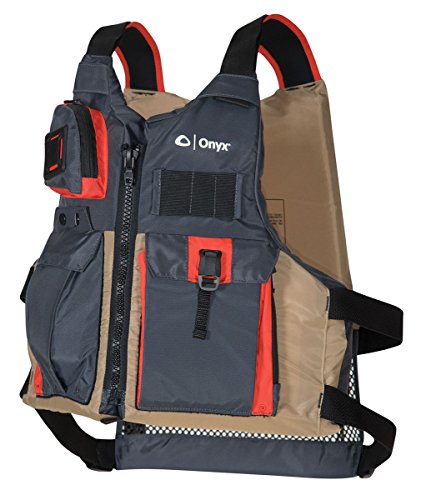
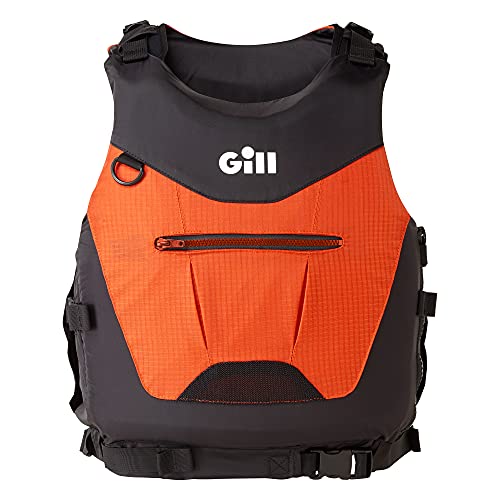
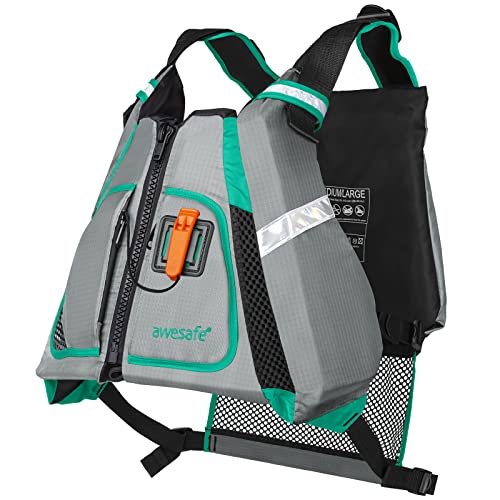
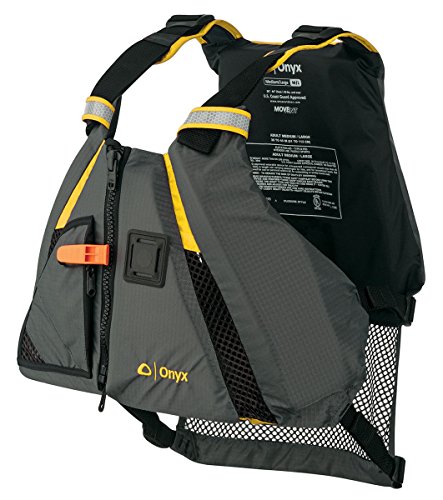
Type V PFDs have a very specific role to play. As per the rules set out by the USCG, a kayaker must wear a Type V PFD all the time while paddling in the water. Be it kayaking, windsurfing or waterskiing, you are required to wear Type V PFDs. Type V PFDs are mainly available in either hybrid or inflatable designs.
Kayak PFD Buying Guide
It is good to see PFDs evolved a lot
from the past. Previously, all PFDs seem to have the same boring design but not
anymore. Today, you can easily spot a modern and stylish looking PFD in your
local superstore. Thankfully, these days PFDs are available in different formats
and shapes. That is a good thing, right? Well not always! For a newbie who just
wants to purchase a simple PFD, this can be a real nightmare.
Beginners might find it incredibly
difficult to find the right PFD that meets his/her requirements without
spending hours on it. T make your job easier, here we are going to share some
tips that might help you in your quest for the best PFD for your next kayaking
escapade.
1. Color
You must be wondering why all PFDs that
we have listed in this article have got bright/fluorescent color combinations
right? Well, there is a reason behind this. The idea is to increase the
visibility of PFD. Brightly color PFDs will help the rescuer spot you in the
event of a boat capsize. In low light conditions, fluorescent color PFDs can be
spotted easily from afar.
2. Tabs/Rings
To attach additional accessories,
you need to ensure that the kayak comes attached with rings and tabs. In a
search and rescue operation, having strobes attached to the ring of the PFD can
prove handy. The problem is not all PFDs have rings attached to them and this
can lead to a lot of confusion in such stressful situations. So, while shopping
for a PFD for your next kayaking trip, you need to be absolutely certain
whether or not you want to attach accessories to your PFD. If your answer is
negative, there is no such need to purchase a kayak PFD with rings.
3. Activity
Your PFD should complement the type
of kayaking you are planning to partake. For example, if you are planning to
participate in a whitewater kayaking, you will definitely need to purchase a
fully articulated PFD. However, if you are planning to paddle on calmer water,
you can then choose a much simpler PFD that does not have any bells and
whistles attached to it.
For whitewater kayaking, you need to
find a PFD that does not interfere with your movement in one way or the other.
However, freedom of movements should not come at the cost of buoyancy. Some
other additional features like mesh pocket lining, mesh sides, etc should also
be taken into consideration while selecting a kayak PFD for your next
whitewater kayaking adventure.
The more extreme the kayaking sport
is, the greater is the need for freedom of movement. This is the rule of thumb.
4. Safety Certification
You need to check the safety
regulations laid out by your local governing body before purchasing a PFD.
Whatever PFD you choose at the end must meet all the safety regulations otherwise
you might get into serious trouble later. If you are an American, you need to
check out the website of the US Coast Guard and then try to find out a PFD that
meets all the USCG rules. Safety comes first always. So, don’t take it lightly.
Always opt for a Kayak PFD that scores high on the safety front.
5. Buoyancy
An average-sized American needs at
least 7 to 12 pounds buoyancy in order to stay afloat in case of a boat
capsize. Most Type III PFDs offer at least 15 pounds buoyancy which is more
than enough for you. Always go for the PFDs with higher buoyancy ratings to
stay on the safe side and you will just be fine.
6. Ventilation
Ventilation is commonly associated
with comfort but it has other important roles to play as well. Since kayaking
is an outdoor sport, it means you will be spending a considerable amount of
time under the sun. It can make you feel flustered at times and which is why
you need to find a PFD that has got ventilation so that your body can cool it
down more effectively and efficiently. A well-ventilated PFD can help you keep
your body temperature in check and at the same time, it will make kayaking a
comfortable experience rather than a tiring one.
7. Durability
Whatever PFD that you decide to
purchase at the end, you need to make sure that it is made from strong and
durable material. Pick a PFD that is either made from neoprene or from 200 D
Nylon. You need to choose a PFD that offers a decent level of flotation and at
the same time, it should offer enough resistant to tearing.
8. Buckles or Zipper
PFD can be worn in more than one
way. Buckles and Zippers are the two popular options. You can zip from the side
or on the front. Now, if you hate the Zipper for all the good or bad reasons,
you also have the option to slide a Kayak PFD over your head and then use the
buckles to get the right fittings. The bottom line is, you need to find a PFD
that allows you to put it on and off without facing any hassle whatsoever.




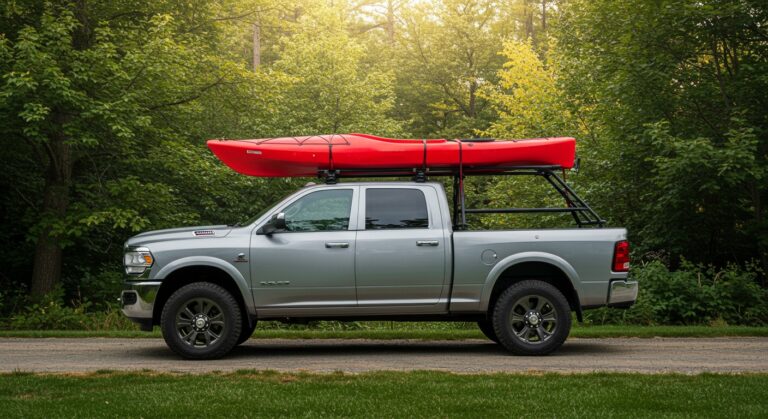 Best Kayak Racks for RAM 2500