

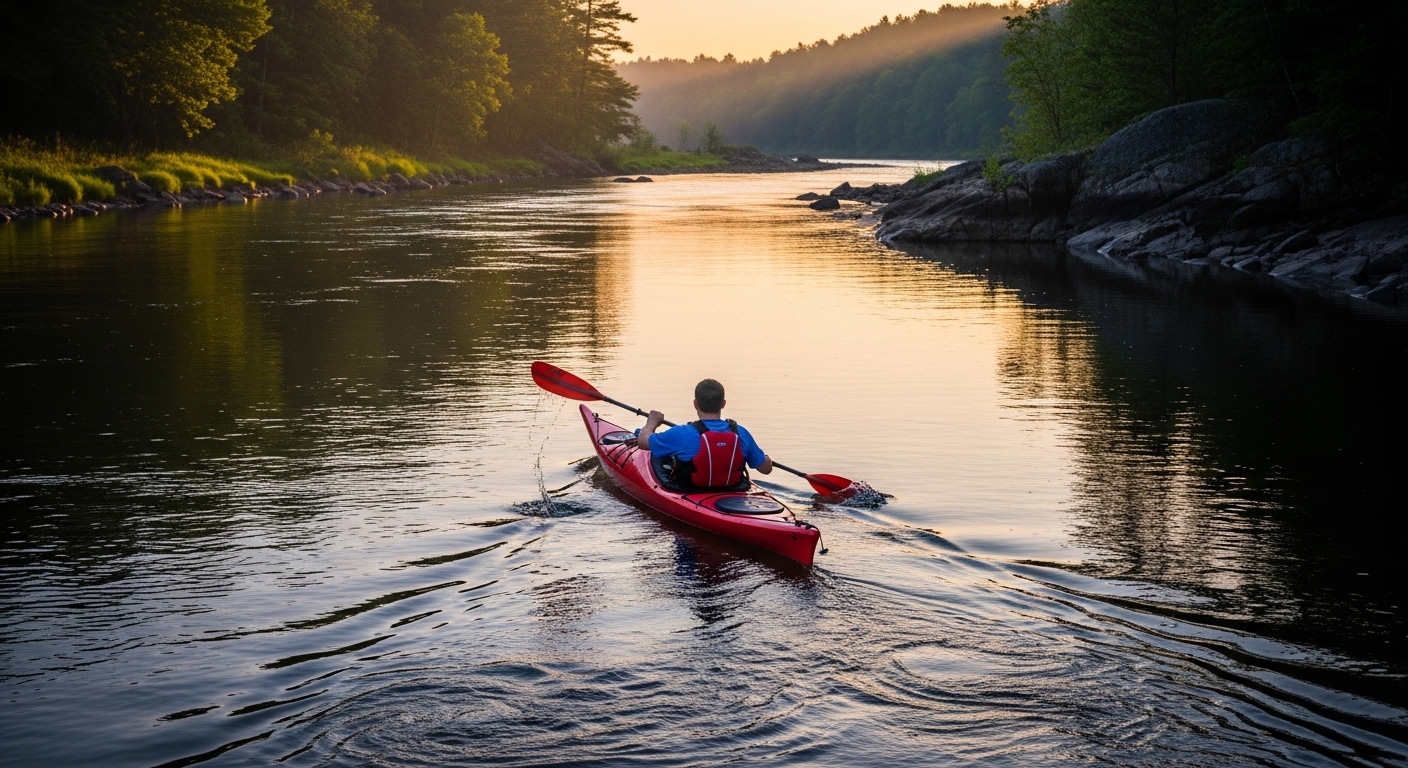
Picking a kayak anchor or push pole sounds simple until you’re sideways in shallow water, boat drifting like it has opinions of its own, and you realize this one decision matters more than expected. Some anchors dig too hard, some barely bite, some feel clever until you actually need them to hold. After looking at build quality, real-world use in sand and mud, weight balance, and how fast you can deploy it without standing up and wobbling, one option keeps rising above the rest. The Itayak Shallow Water Anchor Pole earns the top spot because it’s light but not flimsy, locks into the bottom without drama, and works just as clean as a push pole when you need quiet control, not noise or fiddling. It’s the kind of tool that feels boring at first glance, then slowly becomes the thing you trust most once you’re out there.
Best 5 Kayak Anchor and Push Poles
01. Itayak Shallow Water Anchor Pole

The Itayak Shallow Water Anchor Pole is designed for kayaks, paddle boards, and small boats that spend time in flats, sandbars, and calm shorelines. Built from fiberglass with a stainless steel tip, it pushes easily into sand or soft bottom without much effort. The T-handle gives better leverage, especially when anchoring by hand in knee-deep water.
This anchor pole is commonly used for kayak fishing, inshore sight fishing, and quick stops near shore. It works best in shallow water where traditional anchors are more trouble than they’re worth.
Pros:
- Lightweight fiberglass construction
- Stainless steel tip for better penetration
- Easy manual deployment in shallow water
- Well-suited for kayaks and small boats
Cons:
- Not intended for rocky or hard bottoms
- Limited holding power in strong current
02. SandShark New Sport Boat Anchor

The SandShark New Sport Boat Anchor is a screw-style shallow water anchor made for sand, mud, and firm soil bottoms. Its spiral design allows it to twist into the bottom, providing stronger holding power than straight spike anchors. Made from high-strength composite material, it resists corrosion and holds up well in saltwater environments.
This anchor is popular among anglers who need stability while fishing flats or anchoring near sandbars. It’s compact, easy to store, and works especially well for jet skis, kayaks, and small boats.
Pros:
- Screw-in design improves holding strength
- Corrosion-resistant composite construction
- Compact and easy to transport
- Effective in sand and mud
Cons:
- Slower to deploy than push-in poles
- Less effective in loose or silty bottoms
03. Better Boat Sand Spike Boat Anchor Pole
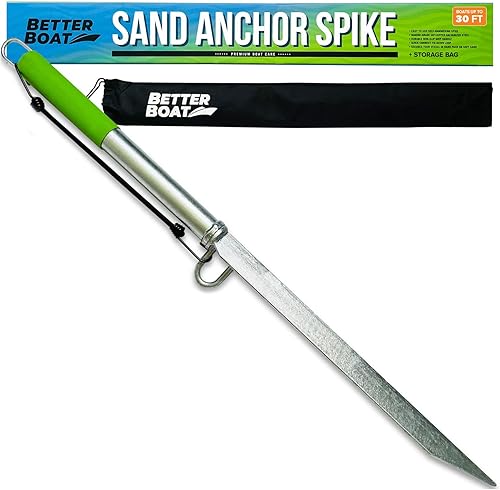
The Better Boat Sand Spike Boat Anchor Pole is built for shallow-water anchoring along beaches, sandbars, and shorelines. Made from durable materials with a pointed tip, it pushes into sand easily and holds small boats steady during calm conditions. It’s commonly used with pontoons, skiffs, and personal watercraft.
This anchor pole is best for quick stops and short anchoring periods rather than overnight use. It’s simple, reliable, and easy to handle for recreational boating.
Pros:
- Simple push-in design
- Works well in sand and shallow shoreline areas
- Lightweight and easy to store
- Suitable for pontoons and small boats
Cons:
- Limited holding power in waves or current
- Not designed for deeper water anchoring
04. FUCNEN Shallow Water Sand Anchor Pole

The FUCNEN Shallow Water Sand Anchor Pole uses a stainless steel build for added strength and corrosion resistance. Designed for sandbars, flats, and shoreline anchoring, it offers solid penetration and durability compared to fiberglass or plastic alternatives. The construction makes it suitable for both freshwater and saltwater use.
This anchor pole is often chosen by boaters who want a more rigid option that holds up well over time. It performs best in sand and packed soil where straight poles can get good bite.
Pros:
- Stainless steel construction improves durability
- Strong holding power in sand and firm bottom
- Suitable for saltwater environments
- Long service life
Cons:
- Heavier than fiberglass anchor poles
- Can be harder to push into compacted ground
05. SandShark Lite Series Boat Anchor

The SandShark Lite Series Boat Anchor is a compact screw-style anchor designed for kayaks, canoes, and lightweight boats. Its smaller size makes it easy to carry, while the spiral design helps it grip sand and mud better than straight stakes. It’s commonly paired with anchor lines or quick-release systems.
This anchor works best for calm water conditions where portability matters more than maximum holding power. It’s a popular option for kayak anglers who want a balance between strength and convenience.
Pros:
- Lightweight and easy to transport
- Screw-style design improves grip
- Compact storage size
- Ideal for kayaks and small craft
Cons:
- Not suitable for larger boats
- Reduced holding strength in strong current or waves
How to Choose the Best Kayak Anchor and Push Poles
Kayak anchors and push poles feel like boring gear choices at first. Plastic stick or metal thing, right. Then the wind slides you sideways while you’re tying a lure, or the tide nudges you just enough that the cast you waited five minutes for goes nowhere useful. That’s when annoyance creeps in. Not rage, just that slow burn, like stepping on wet socks.
Kayak fishing participation in the US alone has climbed steadily over the last decade, with industry participation reports showing millions of anglers choosing kayaks because they are simple, quiet, cheaper to run. But simple gear doesnt mean forgiving gear. A bad anchor choice shows up immediately. Same with a push pole that flexes like a bad mood.
Anchoring a kayak isnt about stopping completely. It’s about stopping just enough. That sentence took me years to understand, honestly.
Anchors vs Push Poles
An anchor is for holding position when depth allows. A push pole is for shallow water control and quiet corrections. People confuse them constantly. I did too. Anchors fight water movement. Push poles negotiate with it, kind of politely.
Push poles shine in water under maybe 6 feet. Flats, marsh edges, slow backwaters. Anchors take over once depth increases or bottom gets unpredictable. Mud, sand, light grass, that’s where poles feel almost smug in how well they work.
Data from coastal fisheries studies show that shallow flats fishing often happens in water less than 4 feet deep for long stretches. That alone should tell you push poles arent optional gear if that’s your zone.
Different Anchor Types
There is no perfect kayak anchor. Anyone who says otherwise probably sells one.
Grapnel anchors
These are the folding claw ones. They grab rocks well, wedges in cracks, holds in rougher conditions. They also love to get stuck forever. Grapnel anchors cause a surprising number of lost anchors every season according to boating incident logs, not dangerous incidents, just lost gear and angry paddlers.
Mushroom anchors
Heavy, rounded, simple. Works decently in mud and silt once it settles. Takes time though. If you drop and expect instant hold, you will drift and question your life choices. Mushroom anchors rely on suction, not bite.
Stake style anchors
These are basically push poles pretending to be anchors. They work in sand, mud, soft bottoms. They fail hard on rock or shell. But when they work, they work quietly. That matters more than people admit.
Anchor Weight
Bigger isnt better here. Kayak manufacturers often recommend anchor weights between 1.5 to 3 pounds depending on kayak length and load. That’s it. More weight just means more swinging momentum and more annoyance pulling it up repeatedly.
Field tests done by small watercraft safety groups show that increasing anchor weight beyond recommended ranges offers minimal holding improvement but significantly increases retrieval fatigue. That tracks with real life. Arms dont lie.
Rope Length
Anchor rope length matters more than anchor shape sometimes. The general guideline is a scope of at least 3 to 1, meaning three feet of rope per foot of water depth. In moving water, closer to 5 to 1 works better.
Short rope causes vertical pull. Vertical pull breaks hold. It’s physics and irritation rolled together. I learned this drifting backwards into reeds once, muttering quietly.
Push Poles
A push pole is just a stick, until it bends. Or rattles. Or sinks. Fiberglass poles are common because they balance stiffness and weight. Aluminum poles are lighter but noisier. Carbon fiber is stiff and light and expensive and makes you nervous about scratches.
Most push poles range from 6 to 10 feet. Shorter poles feel manageable until you’re leaning awkwardly, longer ones feel great until storage becomes a puzzle. There is no correct length, just tradeoffs you pretend dont exist until later.
Shallow water anglers often report higher catch rates when minimizing hull noise. That includes anchor splash and pole clatter. Studies on fish startle response show even small vibrations can reduce feeding behavior temporarily. Quiet matters.
Tips Matter More Than Shafts Sometimes
The tip of a push pole determines whether it sticks or skates. Pointed tips bite into sand and mud. Forked tips grip vegetation and roots. Rubberized tips reduce noise but sacrifice bite.
Some anglers swap tips mid trip. That sounds excessive until you’ve watched a pole slide uselessly across hard sand while the kayak rotates slowly like it’s mocking you.
Mounting And Storage
An anchor that rolls around becomes a tripping hazard. A pole with no clip becomes a swimming lesson eventually. Mounting systems are boring but important. Deck clips, side mounts, bungee holds, they all matter when fatigue sets in.
In surveys of kayak anglers, gear loss often happens not during use but during transitions. Standing up, sitting down, turning around. That’s when anchors slide and poles vanish quietly.
Saltwater vs Freshwater
Saltwater eats things slowly. Freshwater just makes them dirty. Corrosion resistance matters if you fish coastal areas. Stainless steel hardware, sealed rope, non absorbent handles.
Freshwater mud smells worse though. That’s not data, just lived experience.
Personal Bias Confession Section
I lean toward stake style anchors and fiberglass push poles. They fit how I fish. Quiet, shallow, slow. That might not be you. Fast rivers need different thinking. Deep lakes too.
I once carried both anchor and pole and used neither for an hour, just drifting and overthinking. Gear doesnt fish for you. It just removes obstacles.
Final Thoughts
Choosing the best kayak anchor and push pole isnt about optimization. It’s about reducing frustration. That’s it. Less spinning, less noise, less gear wrestling. If you finish a trip without swearing at your setup, you probably chose well.
And if you didnt, well, everyone has a pile of almost right gear somewhere. That pile teaches better than any checklist ever could.
