

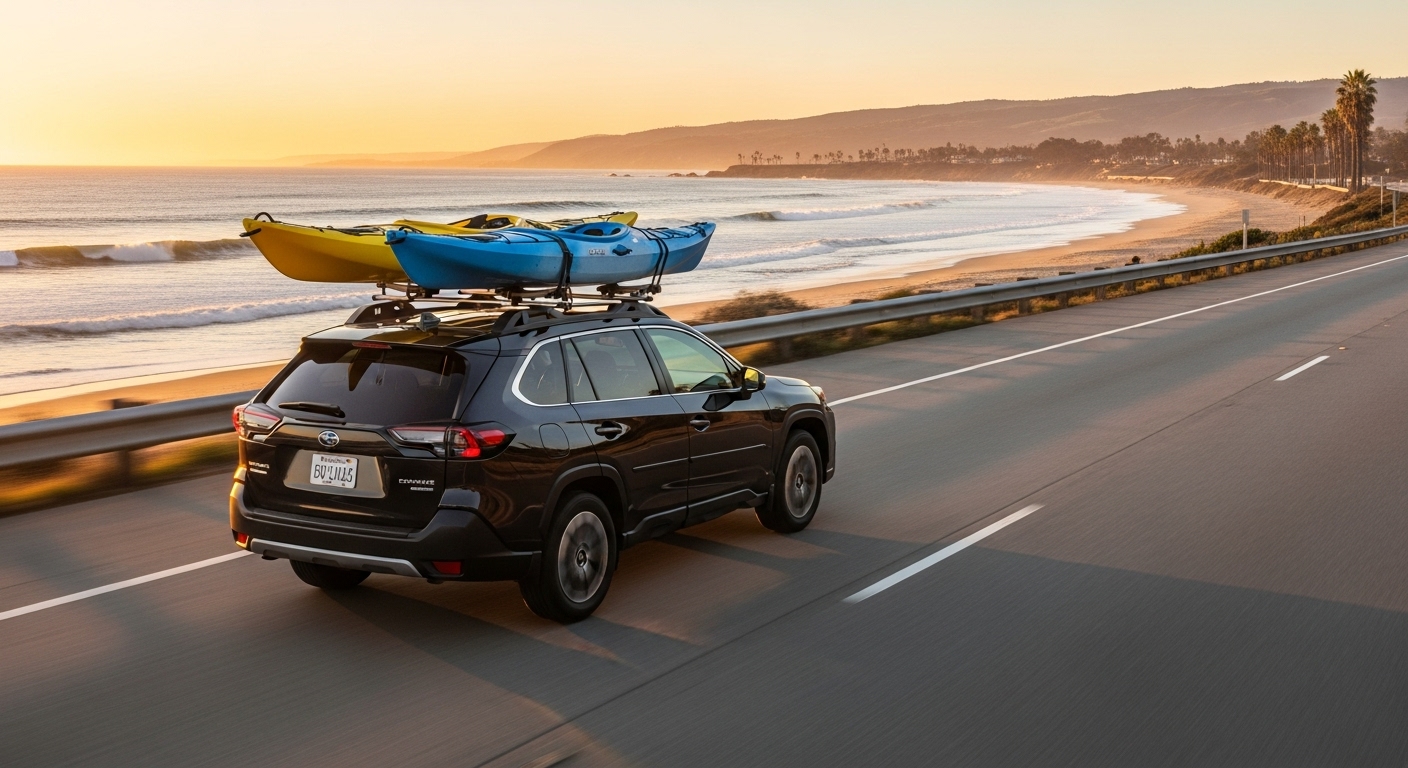
Picking roof racks for a fishing kayak sounds simple until you’re halfway down the road, listening for a new noise, wondering if that strap was tight enough or if the kayak is slowly inching toward freedom. Roof racks are one of those purchases where confidence matters more than specs, because once you load up at dawn, you don’t want doubt riding shotgun. After sorting through weight ratings, padding styles, and the stuff people only complain about after a long drive, one option keeps standing taller than the rest without trying too hard. The PIRIPARA Kayak Roof Rack ends up being the best product here because it holds steady, handles real kayak weight without flex drama, and doesn’t turn every highway mile into a quiet stress test, which is kind of the whole point when you just want to get to the water and fish.
Best 5 Fishing Kayak Roof Racks
01. PIRIPARA Kayak Roof Rack

The PIRIPARA Kayak Roof Rack is a budget-friendly J-style carrier designed for casual paddlers who need a simple way to move a kayak without permanent vehicle mods. Built from aluminum alloy with padded contact points, it fits most factory and aftermarket crossbars and works well for standard sit-on-top and sit-inside kayaks.
It’s commonly used for short highway trips, lake runs, and weekend transport. The folding J-bar design helps free up roof space for a second kayak or cargo box, though long-term durability depends heavily on proper tightening and strap quality.
Pros:
- J-style design saves roof space
- Lightweight aluminum construction
- Compatible with most crossbars
- Includes basic mounting hardware
Cons:
- Padding thickness is limited
- Hardware needs periodic re-tightening
02. FORWODE Premium Kayak Roof Rack

The FORWODE Premium Kayak Roof Rack focuses on adjustability and wider compatibility. The angled cradle design accommodates kayaks, surfboards, and SUPs, making it useful for mixed water-sports setups. The rack mounts securely to crossbars and includes protective padding to reduce hull pressure.
It’s often chosen by users who rotate between different board and kayak sizes. While it handles normal highway driving well, it’s better suited for recreational use rather than constant long-distance hauling.
Pros:
- Adjustable angle supports different watercraft
- Thick padding protects kayak hulls
- Fits most factory and aftermarket crossbars
- Versatile for kayaks, SUPs, and surfboards
Cons:
- Bulkier than standard J-style racks
- Not ideal for very narrow roofs
03. Mrhardware Heavy Duty Kayak Rack

The Mrhardware Heavy Duty Kayak Rack is built for users who want strength over refinement. The steel construction and wide cradle arms are designed to hold heavier kayaks securely, especially during longer drives. It mounts directly to roof crossbars and includes ratchet straps for tighter load control.
This rack is commonly used for fishing kayaks and thicker recreational models. While solid once installed, the steel build adds noticeable weight to the roof and requires more effort during installation.
Pros:
- Strong steel construction for heavier kayaks
- Wide cradle arms improve load stability
- Includes ratchet tie-down straps
- Suitable for fishing and recreational kayaks
Cons:
- Heavier than aluminum alternatives
- Installation takes more time
04. TMS Kayak Roof Racks

The TMS Kayak Roof Racks are a long-standing option in the entry-level kayak carrier category. Featuring a classic J-bar layout with padded arms, they’re compatible with most crossbars and support single-kayak transport at a reasonable price point.
They’re often picked by first-time kayak owners who want something proven and uncomplicated. While the design is basic, it’s reliable for routine hauling when straps are properly secured.
Pros:
- Proven J-style design
- Compatible with most crossbar systems
- Affordable and widely used
- Simple, no-frills setup
Cons:
- Padding can compress over time
- Not the quietest option at highway speeds
05. Thule Hull-a-Port XTR – Kayak j-Style Roof Rack

The Thule Hull-a-Port XTR is a premium J-style kayak carrier built for frequent paddlers and long-distance travel. Its folding design allows the rack to lay flat when not in use, reducing wind drag and garage clearance issues. The padded arms and reinforced structure hold kayaks securely at highway speeds.
This rack is commonly paired with Thule crossbar systems but also works with many factory and aftermarket bars. It’s priced higher than generic options, but the build quality and long-term reliability justify the cost for regular users.
Pros:
- Folding J-style design reduces wind resistance
- High-quality padding and hardware
- Excellent stability at highway speeds
- Compatible with a wide range of crossbars
Cons:
- Higher price compared to basic racks
- Overkill for occasional kayak transport
How to Choose The Best Fishing Kayak Roof Racks
Fishing kayaks are not polite little boats. They are wide, stubborn, loaded with rails, rod holders, crates, sometimes pedals, sometimes a fish smell that never leaves. You lift one and your shoulders complain like old men in a queue. Choosing a roof rack for these beasts is not the same as hauling a skinny recreational kayak. Anyone who says it is, probably never tried loading a 75 pound kayak alone after a long day on the water, sun already dipping, brain half fried.
Most fishing kayaks today sit in the 60 to 90 pound range before gear. Add a crate, battery, pedal drive, random tools you forgot to remove. Suddenly roof rack numbers start to matter more than brand stickers. Manufacturers publish dynamic load ratings for roof systems, and most passenger vehicles fall between 120 to 220 pounds total on the roof while driving. That number includes the rack itself. People forget that part all the time, then wonder why doors creak later.
Start with the roof you actually have
Bare roof. Raised rails. Flush rails. Factory crossbars that look sturdy but feel hollow when tapped. This part is boring but unavoidable. A fishing kayak rack cannot be better than what it bolts into. Bare roofs usually need full mounting kits that clamp into door frames. Raised rails are easier and usually stronger. Flush rails look clean but can limit bar spacing, which matters more than you think.
Bar spread affects stability. Wider spread equals less kayak wobble at speed. Many vehicle roofs limit you to around 28 to 32 inches between bars. That is acceptable but not ideal for long fishing kayaks. Longer boats want more distance, they just do. Some accident data from transport safety studies show roof load sway increases noticeably once bar spacing drops below about 30 percent of kayak length. No one talks about that at the store counter.
Weight ratings
Every rack component has a number stamped somewhere, dynamic load, static load, crossbar rating. Dynamic load is the important one while driving. Static load is for parking, like rooftop tents, not your kayak run to the lake.
Here is a rough reality check. If your kayak weighs 80 pounds and your rack system weighs 40 pounds total, you are already at 120 pounds. Add a second kayak and you might be over spec even before straps. Many cars technically can not carry two heavy fishing kayaks safely on the roof, even if you see people doing it. Seeing it does not make it wise. Road vibration multiplies stress. Wind does weird things. Physics does not negotiate.
J cradles vs saddles vs stackers
J cradles look efficient. They save space, allow two kayaks side by side. For fishing kayaks, they can be a love hate thing. Wide hulls sometimes do not sit cleanly, especially flat bottom designs. You tighten straps and still feel unsure. That feeling is not nothing.
Saddle style racks cradle the hull shape better, especially for heavier kayaks. They spread weight more evenly across the hull. The downside is they usually take more bar width, sometimes only allowing one kayak. If you fish alone most days, this trade off makes sense.
Stackers are simple vertical posts. They rely heavily on straps and user skill. They can work but require patience and good tie down habits. Foam blocks are the wild card. Cheap, light, surprisingly effective for short trips. Many paddlers quietly use them for years. Wind noise is higher. Security is lower. But for occasional hauling, they are not stupid.
Loading height
Roof height plus kayak weight equals misery if mismatched. Lifting a 75 pound kayak onto a tall SUV alone is a recipe for shoulder regret. Rollers, load assist bars, or even rear loading techniques can save joints. Some rack systems include rear rollers that let you slide the kayak up instead of dead lifting. This is not luxury. This is longevity.
A small stat worth noting. Sports medicine surveys show shoulder strain incidents spike in kayak anglers during transport and loading phases, not during paddling. Funny and not funny at the same time.
Straps, bow lines, and the silent trust test at 65 mph
Cam straps are better than ratchet straps for kayaks. Ratchets can crush hulls if over tightened. Cam straps give feedback through your hands. Two straps minimum across the body. Bow and stern lines add redundancy. Redundancy is calm.
People skip bow lines for short trips. Then they hit sudden braking. The kayak wants to keep going. That moment stays with you. Highway safety data shows roof load shift contributes to loss of vehicle control more often during emergency stops than steady speed cruising. Again, not common talk, but real.
Wind noise, fuel economy
Roof racks whistle. Some howl. Fishing kayaks catch air like sails. Expect fuel economy drop. Studies on roof cargo show mpg losses between 5 to 15 percent depending on speed and profile. That is the tax you pay for water access.
Fairings help. Lower profile racks help. Removing racks when not in use helps but nobody does it every time. We all say we will. We rarely do.
Security is part hardware, part paranoia
Locking crossbars deter casual theft. They do not stop determined people. Cable locks through scupper holes add time and noise to any attempt. Parking smart helps more than any lock. Well lit areas. Lines of sight. Trust your instincts. If a place feels wrong, it probably is.
Cold truth before buying anything shiny
Measure your kayak width. Measure your roof bar spacing. Add up real weights, not brochure numbers. Think about how often you load alone. Think about how tired you are at the end of a fishing day. Those answers point you toward the right rack more than any review ever will.
Choosing the best fishing kayak roof rack is not about perfection. It is about reducing bad moments. Less sway. Less strain. Less doubt in the rearview mirror. When the kayak stops being the thing you worry about, and the water becomes the thing again, you picked well enough.
