

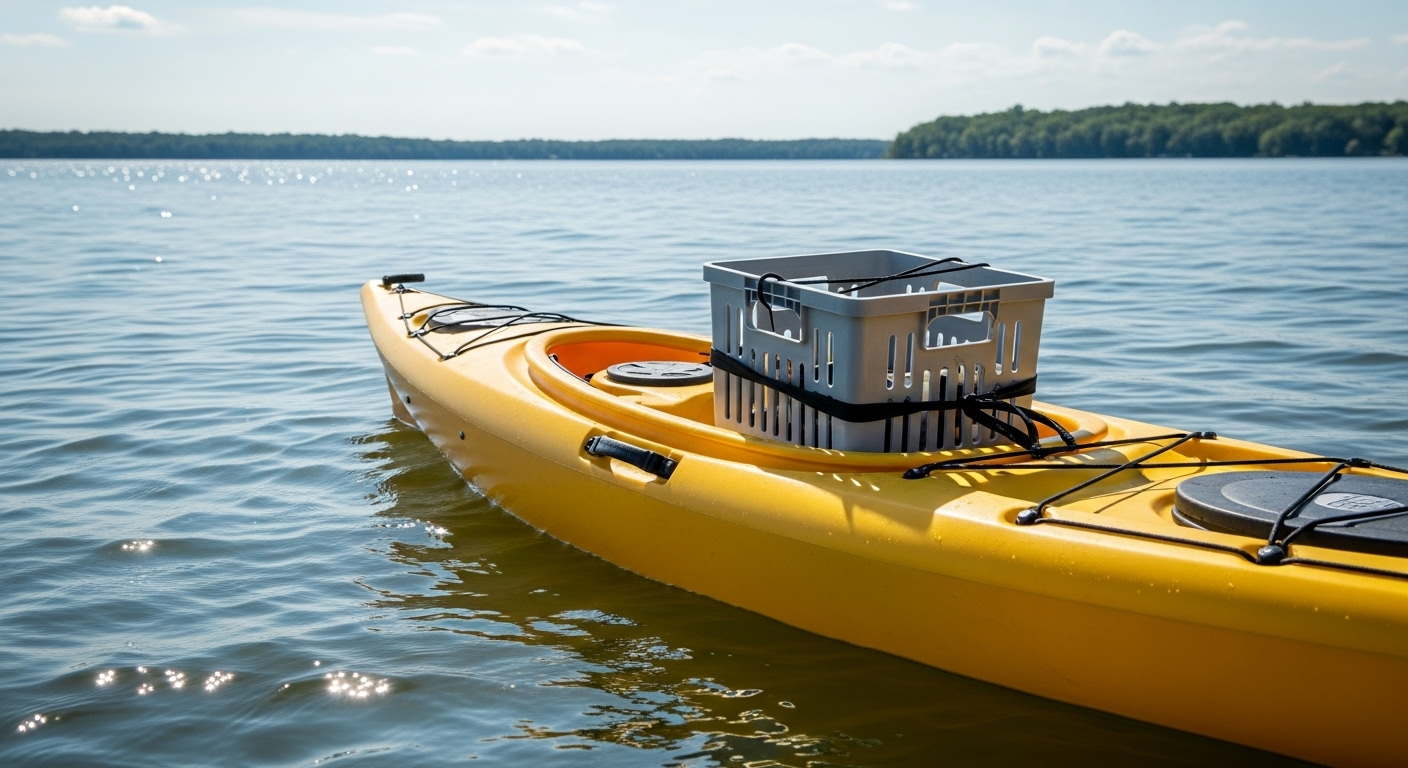
Picking the best kayak fishing crates always sounds simple until you actually try to line them up in your head, space, weight, rod chaos, cold fingers, and that quiet fear of gear going overboard all at once. After sorting through what actually holds up on the water and not just on a product page, one crate keeps coming back without much argument, the YakAttack BlackPak Pro 13″ x 13″ Fishing Crate sits at the top because it just works, steady, modular, doesn’t rattle like a grocery cart, and doesn’t make you rethink every movement behind the seat. The list below breaks down five strong options worth real attention, but this one sets the reference point, the kind of crate others quietly try to measure themselves against, even if nobody says it out loud.
Best 5 Kayak Fishing Crates
01. YakAttack BlackPak Pro 13″ x 13″ Fishing Crate
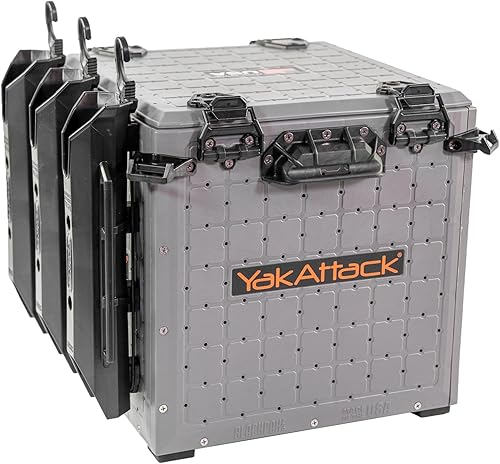
The YakAttack BlackPak Pro 13 x 13 Fishing Crate is built for kayak anglers who want rigid organization without loose straps and collapsing walls. The hard-shell construction holds its shape even when fully loaded with tackle boxes, tools, and camera gear. It’s compatible with most sit-on-top fishing kayaks and integrates cleanly with YakAttack rod holders and track-mounted accessories.
This crate works well for anglers running structured setups, especially those using electronics, rods, and modular storage. It stays stable in rough water and doesn’t shift around once secured, though the rigid build adds some weight compared to soft crates.
Pros:
- Rigid hard-shell design keeps gear protected
- Compatible with YakAttack rod holders and accessories
- Stable fit in most fishing kayaks
- Good layout for organized tackle storage
Cons:
- Heavier than fabric-based crates
- Higher price compared to basic kayak crates
02. Wilderness Systems Kayak Crate

The Wilderness Systems Kayak Crate is a simple, no-frills option for anglers who want open storage without complicated mounting systems. The soft-sided design allows quick access to tackle trays, dry bags, and tools, making it useful for casual fishing trips and shorter outings.
This crate is commonly used on sit-on-top kayaks where flexibility matters more than rigid structure. It’s lightweight and easy to remove, though it doesn’t provide the same level of protection or customization as hard crates.
Pros:
- Lightweight and easy to handle
- Open design allows quick access to gear
- Fits most sit-on-top kayaks
- Simple setup with minimal hardware
Cons:
- Less structured organization
- Limited protection for delicate gear
03. YakAttack ShortStak Solo Storage Box

The YakAttack ShortStak Solo Storage Box is designed for anglers who prefer compact, modular storage over bulky crates. It stacks neatly and works well for tackle, terminal gear, and small tools, especially on kayaks with limited rear deck space.
This box is often used as part of a modular system rather than a standalone crate. It’s a good fit for minimalist setups or anglers who want to customize their loadout without committing to a large storage platform.
Pros:
- Compact size fits smaller kayak decks
- Stackable modular design
- Durable hard-shell construction
- Easy to integrate into custom setups
Cons:
- Limited storage capacity
- Not ideal for carrying larger gear
04. EDSRDPLT Kayak Crate Bag
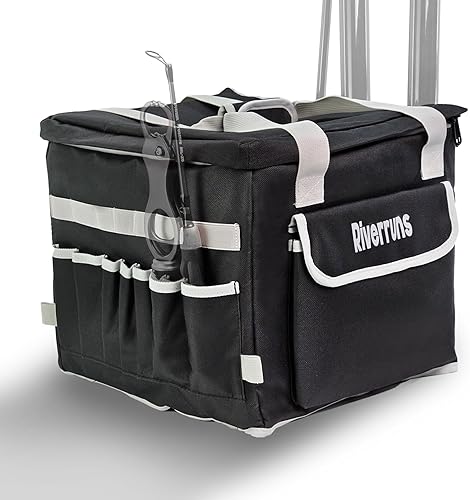
The EDSRDPLT Kayak Crate Bag is built to add soft storage and weather resistance to standard 13 x 13 kayak crates. The fabric design helps protect tackle and gear from splashes, saltwater exposure, and sun while still allowing flexible packing.
This bag works well for anglers who already use a milk crate or plastic crate and want better organization without switching to a rigid system. It’s lightweight and easy to remove, though it depends heavily on the crate underneath for structure.
Pros:
- Fits standard 13 x 13 kayak crates
- Saltwater-resistant fabric
- Adds storage without much added weight
- Easy to install and remove
Cons:
- Requires a separate crate
- Less protection than hard-shell systems
05. YakAttack TracPak Black Combo Kit

The YakAttack TracPak Black Combo Kit is designed for anglers who want small, stackable storage that mounts directly to kayak gear tracks. The system keeps tools, tackle, and accessories within arm’s reach, reducing the need to turn or reach behind while fishing.
This setup works especially well on pedal kayaks and fishing kayaks with limited deck space. It’s more about accessibility than bulk storage, making it a strong option for frequently used items rather than full tackle loads.
Pros:
- Track-mounted design keeps gear accessible
- Stackable storage boxes
- Clean, compact footprint
- Works well on fishing kayaks with gear tracks
Cons:
- Limited total storage volume
- Higher cost compared to basic storage boxes
How to Choose The Best Kayak Fishing Crates.
Nobody wakes up thinking about crates. Rods, yes. Reels, always. That one lure that vanished last season, still hurts. But crates show up later, usually after a clumsy moment where pliers slide into the water and you just stare, quiet, like something personal was taken. A kayak fishing crate is not flashy gear. It’s a box. Plastic. Holes everywhere. Yet somehow it becomes the center of gravity for how a day goes, or doesn’t.
The market got crowded. Sales data from paddle fishing retailers over the last decade show storage accessories growing faster than kayaks themselves, roughly a few percent year over year depending on region. Which tells you something. People are buying boats, then realizing too late that stuffing gear under the seat like a raccoon is not a long term plan.
Size is not just inches, it’s attitude
Most crates hover around the 13 by 13 inch footprint. Sounds boring. It isn’t. That size fits most tank wells without the crate rocking side to side like it had coffee jitters. Go larger and suddenly you’re wrestling straps, leaning back too far, knocking rods with your elbow. Go smaller and you’re stacking gear like pancakes, flat and nervous.
Capacity matters but so does how you pack. A crate rated for 30 to 40 pounds sounds fine until you remember water adds weight, then mud, then three fish you swear you’ll release but maybe not. Kayak stability studies show that shifting even 10 percent of load above the deck line can affect balance in narrower hulls. You feel it. Subtle, but there.
Milk crate nostalgia vs purpose built boxes
The milk crate thing is real. Cheap. Everywhere. They smell like garages and bad decisions. Plenty of anglers still use them and honestly, they work. But purpose built kayak crates fixed some dumb problems. Rounded edges that don’t chew straps. Thicker walls that don’t crack when cold water meets sun baked plastic. Pre drilled slots that don’t look like a beaver got bored.
The trade off is cost. A generic crate costs almost nothing. A fishing specific crate costs enough that you pause before checkout. That pause is where regret lives. But also quality. Polymer blends used in higher end crates resist UV breakdown much better. Long term outdoor plastics research shows untreated plastics can lose noticeable strength after a few seasons of sun exposure. That’s not theory. That’s the crack you hear lifting it wrong.
Rod holders are both blessing and curse
Vertical rod holders look great in photos. Like a porcupine that fishes. In reality, placement matters. Too upright and wind grabs them. Too far back and casting turns into an elbow ballet. Some crates let you angle holders slightly outward which helps more than people admit.
Think about how many rods you truly fish with. Not own. Fish with. Data from tournament kayak events shows most anglers actively use two to three rods per session even if they bring six. Extra holders often become storage for rods you’re afraid to leave at home. Fear based gear is heavy gear.
Mounting options and the silent frustration of straps
Bungee cords feel fine until they stretch. Straps feel secure until they rub. The best crates have molded tie down channels that keep straps from sliding sideways mid paddle. It’s a small thing. Until it isn’t.
Some anglers drill their crates to mount accessories. That’s fine. Until you drill the wrong spot and now water pools where it shouldn’t. Drainage matters. Water trapped inside a crate adds weight and smells like regret by the third trip.
Modularity is not just a buzzword, it’s sanity
Modular crates let you add boxes, remove boxes, shift things around when seasons change. Summer means soft plastics and sunblock everywhere. Fall means heavier tackle, maybe a thermos you pretend you won’t need. Being able to reconfigure without buying an entirely new crate is underrated.
Surveys from kayak fishing forums show anglers who customize storage gradually report fewer mid season gear changes. Less buying twice. Less swearing.
Material thickness and that one cold morning
Plastic behaves differently when it’s cold. Thin crates flex, then snap. Thicker walls feel heavier in the store but survive that early morning launch when hands are numb and patience is thin. Look for reinforced corners. They matter more than color or logo placement.
Weight matters more than people say out loud
Empty crate weight ranges from roughly 3 to 7 pounds. Doesn’t sound like much. Add gear and suddenly you’re hauling a small child behind you. Kayak efficiency studies show even small increases in rear weight can affect tracking over long paddles. You won’t notice immediately. You notice after an hour, when shoulders start whispering complaints.
Think about how you actually fish, not how you post photos
Standing anglers need lower profiles. Seated anglers can go taller. Someone who trolls needs quick access. Someone who flips docks needs silence, no rattling plastic orchestra behind them. Crates amplify noise if poorly packed. Foam inserts help. So does not overloading like it’s a garage shelf.
I once watched a guy dump half his crate flipping a bass. He landed the fish. Lost everything else. He laughed. Later, he didn’t.
Price is not the enemy, replacement is
Spending more upfront hurts once. Replacing cracked crates, lost gear, broken mounts hurts repeatedly. Industry replacement cycle estimates suggest anglers replace low end storage nearly twice as often as mid range systems. That adds up quietly, like small leaks.
Conclusion
Choosing the best kayak fishing crate isn’t about finding the perfect one. It’s about finding the one that stops you thinking about it once you’re on the water. The crate should disappear from your mind. No sliding. No clanking. No surprise swimming pliers.
If you’re thinking this feels like too much thought for a box, you’re right. And also wrong. Because the right crate is the difference between fishing and managing stuff. And most of us would rather fish, even on days when nothing bites and the coffee goes cold.
