

If you’ve been researching PFDs for kayaking and noticed that some are labeled for whitewater or river use while others are designed specifically for sea kayaking or touring, you’re dealing with a distinction that matters more than most people realize. The difference between a river PFD and a sea kayak PFD goes well beyond aesthetics or brand positioning. It reflects fundamentally different environments, different hazards, different rescue scenarios, and different functional requirements. Choosing the right type for your paddling context could directly affect your safety. This guide breaks down what separates these two categories of life jackets and how to decide which one belongs on your body.
First, Let’s Be Clear on PFD Types
The U.S. Coast Guard classifies PFDs into five types, but most kayakers operate in two: Type III and Type V. Type III PFDs are buoyancy aids designed for active water sports, providing 15.5 pounds of minimum flotation. They come in a wide variety of designs, are comfortable for continuous wear, and cover most recreational and touring kayaking situations. Type V PFDs are specialized devices designed for specific activities — including whitewater rescue — and typically must be worn at all times to count toward Coast Guard carriage requirements. They often provide greater buoyancy, typically 15.5 to 22 pounds.
Both river PFDs and sea kayak PFDs are most commonly Type III, with some river rescue vests crossing into Type V territory. Understanding these regulatory categories is the foundation, but the real differences lie in design features, not just ratings.
River PFDs: Built for Impact and Dynamic Water
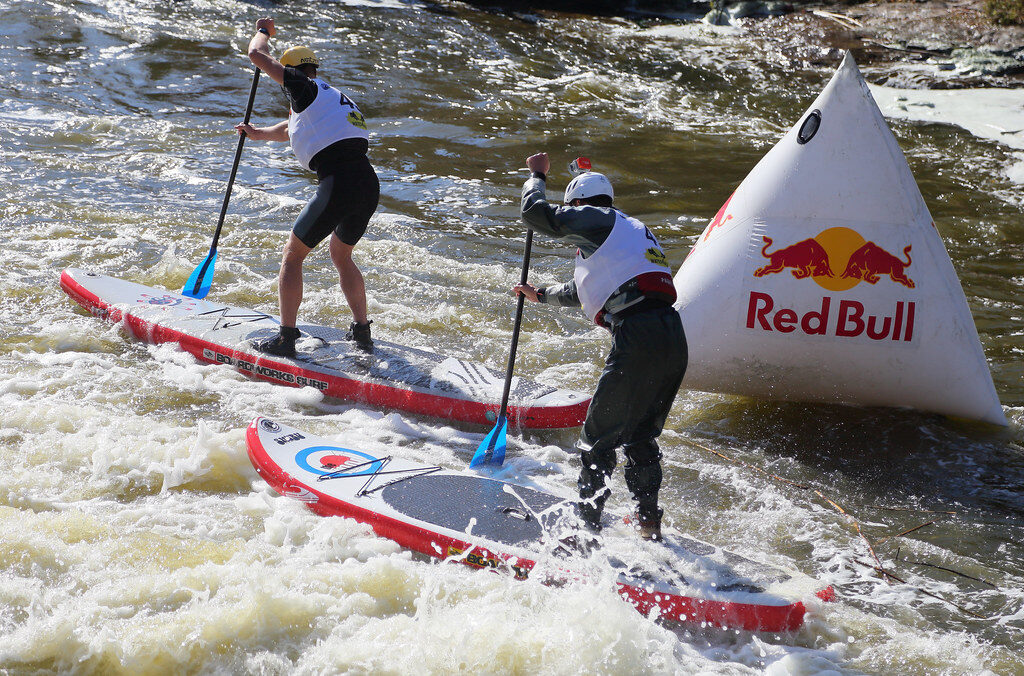
Whitewater and river kayaking involves a specific combination of hazards: fast-moving water, hydraulics and holes that can hold a swimmer, rocks and submerged obstacles, and the physical demands of aggressive paddling through technical terrain. River PFDs are designed around this environment.
The most distinctive feature of a river PFD is its low-profile, compact design. River kayakers need absolute freedom of upper body movement to execute aggressive paddle strokes, braces, and rolls. River PFDs achieve this through side-entry or pullover designs that eliminate front zippers — which add bulk — and through foam panels that are carefully shaped and positioned to allow the shoulder girdle and torso to move fully without restriction. The overall silhouette is typically shorter and blockier than a touring PFD, because the foam needs to go somewhere when the vest is shortened to avoid interfering with a spray skirt.
River rescue vests — the Type V version of the river PFD — include an integrated quick-release rescue belt above the waist. This belt is used in swiftwater rescue scenarios where a trained rescuer allows themselves to be tethered to shore or another rescuer via a throw rope, then can release from that tether if they become endangered. The quick-release mechanism is safety-critical and requires formal training to use — an untrained paddler wearing a rescue vest and attached to a rope in moving water faces serious risk of entrapment. This is emphasized strongly by instructors: a rescue belt in the wrong hands is more dangerous than no rescue belt.
River PFDs typically have fewer pockets than sea kayak PFDs, because in whitewater there’s less need for on-water gear storage. Most river paddlers aren’t navigating by chart, carrying VHF radios, or managing the accessories associated with multi-hour open water touring. What storage exists tends to be minimal, with lash tabs for a knife and possibly one small zippered pocket.
Sea Kayak PFDs: Built for Endurance and Open Water
Sea kayaking and touring involves a completely different set of demands. Paddlers may be on the water for hours or days at a time, often far from shore, in conditions that can change from calm to dangerous with little warning. The hazards are less about impact and dynamic water and more about exposure, distance from help, cold water, and the time it might take for assistance to arrive.
Sea kayak PFDs reflect these priorities in several meaningful ways. Storage is substantially more extensive. Paddling Magazine’s gear guides note that sea kayaking PFDs typically carry more pockets than conventional designs, including a dedicated pocket sized for a VHF radio. Most also feature multiple lash points for attaching a knife, strobe light, or other safety accessories, and reflective material or SOLAS-grade reflective piping for visibility in low light and from rescue aircraft or vessels. On open water, being visible matters.
The back panel design of a sea kayak PFD is typically different from a river PFD. Sea kayakers sit in kayaks with taller backrests or with backrests positioned differently than whitewater cockpits. Many sea kayak PFDs feature a mesh back or thin-back design that accommodates taller seat backs without the vest riding up uncomfortably or creating pressure points during hours of paddling. This is a comfort and ergonomic consideration that becomes significant on long touring days.
Some sea kayak PFDs include a provision for attaching a quick-release tow belt — used when one paddler needs to tow another whose kayak is disabled or whose paddler is fatigued. This is different from a river rescue belt. A tow belt in sea kayaking attaches to a floating line stored in a belt pouch, allowing the towing paddler to clip in, tow, and detach quickly if conditions require. It’s designed for the slower-water, longer-distance scenario of open water group paddling.
Key Feature Comparison
Here’s how the two categories compare across the features that matter most:
Range of Motion: River PFDs prioritize this above almost everything else. Side-entry and pullover designs, minimal front hardware, and strategically cut foam maximize shoulder and torso mobility for aggressive paddling. Sea kayak PFDs also offer good mobility, but as a balance with storage and feature set rather than as the primary design driver.
Storage: Sea kayak PFDs win significantly here — multiple zippered pockets, radio pockets, lash tabs, D-rings. River PFDs typically offer minimal storage: a lash tab and perhaps one small pocket. On a multi-hour sea crossing, storage matters. On a Class IV rapid section, extra pockets are just extra weight and drag.
Visibility Features: Sea kayak PFDs typically include reflective material, SOLAS piping, and sometimes bright color options specifically for open water visibility. River PFDs may have reflective elements but are less consistently designed around visibility as a priority, because river kayaking usually occurs closer to shore and other people.
Rescue Harness/Belt: River rescue vests feature integrated quick-release belts designed for swiftwater rescue by trained professionals. Sea kayak PFDs may include a tow belt provision for a different rescue function — towing a disabled paddler across open water. These serve different purposes and should not be interchanged.
Back Panel Design: River PFDs are generally cut to work with whitewater kayak seating, which tends to be lower and more reclined. Sea kayak PFDs more commonly feature high-back mesh or thin-back designs that accommodate the taller seats of touring and recreational kayaks without creating discomfort on long paddles.
Buoyancy: Standard river and sea kayak Type III PFDs both meet the 15.5-pound minimum. River rescue vests (Type V) can range up to 22 pounds of buoyancy, providing additional flotation in turbulent, aerated water where the effective buoyancy of foam decreases. For sea kayaking, some paddlers prefer slightly higher buoyancy in case of an extended time in cold open water before rescue arrives.
Can You Use a River PFD for Sea Kayaking (and Vice Versa)?
Technically, any USCG-approved Type III PFD meets the legal carriage requirement for kayaking in most jurisdictions, regardless of whether it’s designed for river or sea kayak use. But meeting the legal requirement and being well-equipped for your specific environment are different things.
Using a river PFD for sea kayaking: you’ll have excellent mobility but limited storage, possibly no reflective material, a tall backrest that may not be comfortable on long paddles, and no provision for a tow belt. On a day paddle near shore in calm conditions, this is manageable. On a multi-day coastal route or an open water crossing, you’d be underequipped for the environment.
Using a sea kayak PFD for river kayaking: the mobility is somewhat reduced compared to a river-specific design, and the additional pockets and features add bulk and weight that you don’t need. On a calm Class II river, this is fine. On technical Class IV or V whitewater, the reduced mobility and added weight could create real issues, and you’d lack the impact-oriented design priorities of a true river PFD. For whitewater rescue operations, using a sea kayak touring PFD with no integrated rescue belt is simply not appropriate.
Matching Your PFD to Your Actual Paddling
If you paddle primarily on rivers, creeks, and whitewater: choose a river-specific Type III PFD from a reputable whitewater brand. If you’re involved in rescue operations or advanced technical whitewater, evaluate whether a Type V rescue vest with proper training makes sense. If you paddle open water, coastlines, large lakes, or do touring: choose a sea kayak or touring PFD with the storage, visibility, and back panel design appropriate for long paddles and open water conditions.
If you do both: consider owning both. PFDs from quality brands like Kokatat, Astral, NRS, and Stohlquist in the $80–$200 range represent a meaningful safety investment that lasts years with proper care. Having the right tool for each environment is more important than the cost of maintaining two vests.
The One Rule That Never Changes
Whether you choose a river PFD or a sea kayak PFD, the rule is the same: wear it. A PFD stuffed in a hatch or bungeed to the deck provides zero protection if you capsize. The best PFD for any paddler, in any environment, is the one that fits correctly, is comfortable enough to wear all day, and is actually on your body when something goes wrong. Fit it when dry, test it in controlled water before relying on it, and adjust it so it cannot ride up over your head when you’re floating. Beyond that, your environment determines the design — and getting that match right is what this article is about.
