We may earn a commission when you buy through our links, at no extra cost to you.
How to Choose the Best Kayak Racks for Chevy Colorado
Finding a kayak rack that properly fits your Chevy Colorado ain’t as simple as grabbing the first thing Amazon throws at you. You got different bed sizes, cab types, and them crossbar clearances to think about. Lotta people miss that part. Then when they load the kayak, the back glass gets cracked or worse—rack bends under weight.
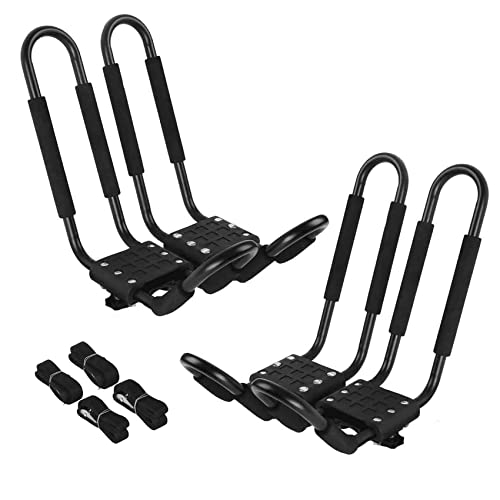
You gotta start by lookin’ at what kinda kayak rack for Chevy Colorado fits your truck bed. Some folks go for over-cab truck racks, especially if they carry 12-foot kayaks or longer. Others like them J-style kayak carriers that sit real nice on crossbars. If you got a Colorado Z71 or Trail Boss trim, check your roof rail compatibility first. Some racks need factory rails, some don’t.
Match Rack Type With Kayak Size
Small kayak? You might just need a J-cradle that mounts to roof crossbars. But for bigger ones—like tandem kayaks or ocean types—you’ll want bed-mounted kayak racks or utility racks that stretch over the cab. That gives more surface area so you ain’t stressing one point. You’d also get better balance that way.
Don’t forget weight limit. A lotta folks just look at the kayak’s weight, but they ignore rack rating or how strong them cab rails are. Most Chevy Colorado roof rails can handle 100–150 lbs dynamic load, but bed racks often take more.
Also: stacker kayak carriers let you haul multiple kayaks upright. But that don’t work great on low-roof trucks unless you get a lift bar or use a rear roller to push it up.
Consider Truck Cab and Bed Setup
If you got a Chevy Colorado Crew Cab, your roof’s longer than the Extended Cab one. So you’ll have more room to fit a roof-mounted kayak rack. Extended cabs, though, often need bed extenders or ladder racks if you wanna carry longer kayaks safely.
For short bed models, best to avoid racks that need front-to-back length unless you’re okay with some overhang. Otherwise, your setup might look funny or block your third brake light.
Lots of people don’t think about tonneau cover compatibility. If you use a soft roll-up cover, then a clamp-on truck bed rack might mess it up. You gotta pick ones that bolt to stake pockets or are designed to go around covers.
Mounting Style Makes a Big Difference
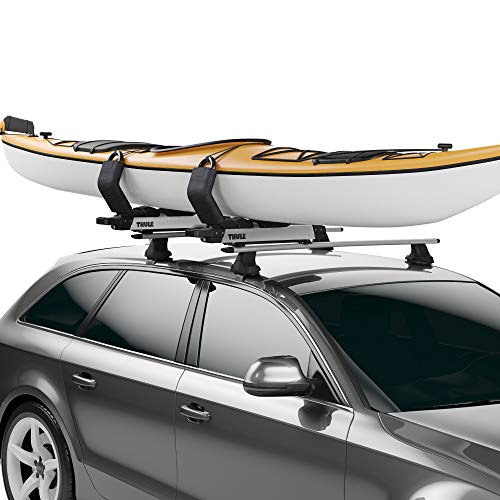
There’s drill-mounted, clamp-on, and T-slot systems. T-slot works well with crossbar systems like Thule and Yakima, if your Chevy’s got aftermarket rails. Clamp-on ones are easier but sometimes come loose if you hit rough trails.
Drill-mounted racks? Real solid. But you better be sure you want it there forever, ‘cause them holes don’t disappear. Some truck racks let you adjust height, which is good if you don’t wanna kill your MPG with wind drag from a high kayak setup.
There’s also removable kayak racks that don’t leave hardware on when you’re done. Handy if you only kayak once in a while and don’t wanna keep the rig up 24/7.
Materials & Durability – Don’t Skip This Part
Most kayak racks made from aluminum, steel, or composite plastic. Steel strong, but it rusts faster unless powder coated good. Aluminum’s lighter, don’t rust easy, but bends quicker if overloaded. Composite? Meh. Okay for light kayaks, but not for hauling 70-pounders on highway runs.
Check if the rack comes with rubber pads, tie-down straps, and bow/stern ropes. Some cheaper brands skimp on those. You’ll end up spending more on accessories later.
If your area gets salty roads or beach spray, pick a rack with corrosion resistance. Ain’t fun trying to unscrew rusted bolts in middle of a road trip.
Wind Noise, MPG & Clearance Issues
Real talk—kayak racks make noise. Some brands more than others. If you doing long drives, it’s worth payin’ extra for ones with wind fairings or aero bars. Less hummin’, better mileage.
Also, measure garage clearance before installing a tall over-cab rack. Sounds dumb, but people forget and wreck their setup pullin’ into parking structures. Don’t be that person.
Even road clearance matters. Some racks lower the kayak so much that it scrapes the tailgate when you back up a slope. Test that with cardboard or broom before loading for real.





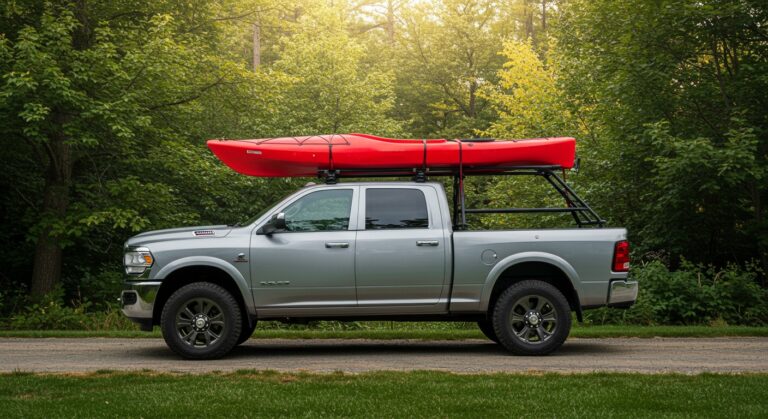 Best Kayak Racks for RAM 2500
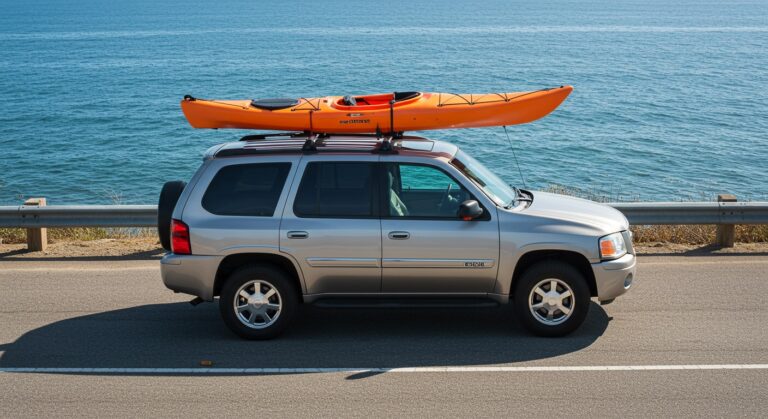 Best Kayak Racks for GMC Envoy