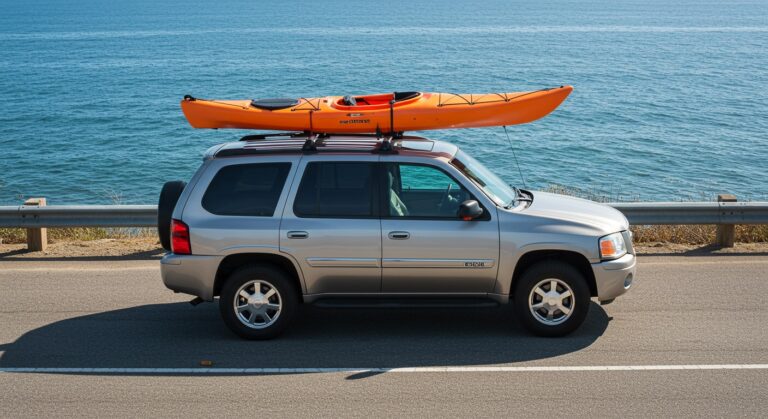
Best 10 Kayak Rack For Cars Without Rails

By Arthur · Updated · 11 min read

We may earn a commission when you buy through our links, at no extra cost to you.

Transporting a kayak on the roof of your car does not have to be complicated. But sometimes, it does get a bit complicated when your car does not have any rails installed on its roof. If your car does not have any roof already installed on it, don’t feet disappointed because there are hundreds of different varieties of Kayak roof racks for cars without rails available in the market. These kayak racks that can be installed on the roof of your car even when the rails are missing. They are easy to install and does not need you to drill any holes.

Our top picks at a glance

Top pickBest tough-fabric pads Abahub 32-Inch Soft Roof Rack Pads

Abahub 32-Inch Soft Roof Rack Pads

On a car with a bare roof, the Abahub 32-inch pads give a kayak a padded base without any crossbars.

Check price on Amazon
Runner-upBest aerodynamic pads WooWave Kayak Roof Rack Pads

WooWave Kayak Roof Rack Pads

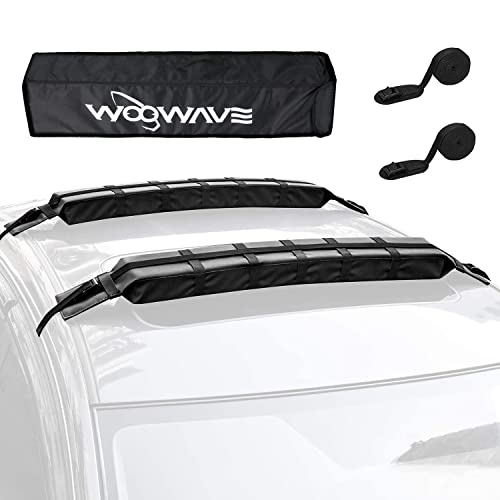
WooWave Kayak Roof Rack Pads are designed to allow cars without rails to transport kayaks on their roof without spending a fortune on it.

Check price on Amazon
Also greatMost tie-downs included MeeFar Soft Roof Rack Pads

MeeFar Soft Roof Rack Pads

MeeFar's soft roof rack is a strong fit for cars without rails because it ships with more tie-downs than most: four 15-foot straps with padded cam locks, four 15-foot bow...

Check price on Amazon

Quick comparison

ImageProductStandout featurePrice
Abahub 32-Inch Soft Roof Rack PadsAbahub 32-Inch Soft Roof Rack PadsBest tough-fabric padsWorks on bare roofsCheck price
WooWave Kayak Roof Rack PadsWooWave Kayak Roof Rack PadsBest aerodynamic padsNylon exterior handles temperature swingsCheck price
MeeFar Soft Roof Rack PadsMeeFar Soft Roof Rack PadsMost tie-downs includedFour straps, four ropes, four loopsCheck price
Drytuns Soft Roof RacksDrytuns Soft Roof RacksBest simple soft rackWorks with or without rails or guttersCheck price
LASUK Universal Soft Roof Rack PadsLASUK Universal Soft Roof Rack PadsBest wet-weather pads80 kg load ratingCheck price
KUIPERAUTO Universal Roof Rack Cross BarsKUIPERAUTO Universal Roof Rack Cross BarsBest adjustable-length crossbarsFits naked roofs without railsCheck price
RainMan S Universal Roof Cross BarRainMan S Universal Roof Cross BarBest for heavier loads330 lb listed capacityCheck price
Seah Hardware Universal Roof Rack Cross-BarsSeah Hardware Universal Roof Rack Cross-BarsBest for four-door sedansFits four-door cars without railsCheck price
Malone VersaRail Bare Roof Cross Rail RackMalone VersaRail Bare Roof Cross Rail RackQuietest rideA wrench is provided hence you need no additional tools for assemblyCheck price
HandiRack Universal Inflatable Roof RackHandiRack Universal Inflatable Roof RackBest inflatable optionInflates quickly with included pumpCheck price

Best 10 Kayaks Racks for Cars That Don’t Have Rails

Abahub 32-Inch Soft Roof Rack Pads
#1 · Best tough-fabric pads

Abahub 32-Inch Soft Roof Rack Pads

On a car with a bare roof, the Abahub 32-inch pads give a kayak a padded base without any crossbars. They are designed for SUVs, sedans, hatchbacks and 2-door or 4-door cars with or without side rails. The EVA foam is wrapped in 1680D fabric with a reinforced PVC coating, and the non-slip underside helps keep the pads from shifting.

Two 13-foot cam buckle straps hold the pads to the car, four 16-foot straps secure the kayak, and two T-shaped loop straps are included as well. The cam buckles have neoprene sleeves so they are less likely to scratch paint as you toss straps over. Abahub does not publish a load rating, so follow your owner's manual for roof limits.

What we like
  • Works on bare roofs
  • Durable 1680D fabric shell
  • Sleeved buckles protect paint
  • Loop straps included
Keep in mind
  • No published load rating
  • Straps run through the car's interior
Check price on Amazon
WooWave Kayak Roof Rack Pads
#2 · Best aerodynamic pads

WooWave Kayak Roof Rack Pads

WooWave Kayak Roof Rack Pads are designed to allow cars without rails to transport kayaks on their roof without spending a fortune on it. Its exterior is made from nylon that has made it impervious to the vagaries of nature and can withstand extreme fluctuations in the temperature. Its interior is made from an EPE foam pad that helps to cushion impacts during the transportation process. Compatible with almost all kinds of vehicles, WooWave Kayak Roof Rack Pads allow you to transport a wide range of watercraft like surfboards, SUPs, kayaks, and more with ease and elan.

Aerodynamic design makes the journey more comfortable and its lightweight design makes it extremely popular among paddlers of all age groups. The straps are waterproof and that means, they will last long even when they are exposed to extreme weather. These straps are made from heavy-duty polyester and therefore, they are highly resistant to abrasion and the harmful UV rays of the sun. Known for their impressive break strength, WooWave Kayak Roof Rack Pads will help you keep the kayak in place during the entire transportation process.

What we like
  • Nylon exterior handles temperature swings
  • EPE foam cushions impacts
  • Carries kayaks, SUPs and surfboards
  • Waterproof heavy-duty polyester straps
Keep in mind
  • Less rigid than a hard crossbar rack
  • Straps need rechecking on long drives
Check price on Amazon
MeeFar Soft Roof Rack Pads
#3 · Most tie-downs included

MeeFar Soft Roof Rack Pads

MeeFar's soft roof rack is a strong fit for cars without rails because it ships with more tie-downs than most: four 15-foot straps with padded cam locks, four 15-foot bow and stern ropes and four quick loop straps. That lets you secure the pads to the roof and fully lash the kayak at both ends. The pads work on vehicles with or without gutters.

A built-in non-slip mat helps protect the roof and holds the pads tightly to reduce wind noise, while EVA foam cushions the kayak. According to the listing, it holds one to two kayaks or longboards depending on their size. Installation is tool-free, and the foldable pads pack into a storage bag between trips.

What we like
  • Four straps, four ropes, four loops
  • Fits roofs with or without gutters
  • Non-slip mat reduces wind noise
  • Tool-free setup
Keep in mind
  • No load rating stated
  • Two kayaks depends on their size
Check price on Amazon
Drytuns Soft Roof Racks
#4 · Best simple soft rack

Drytuns Soft Roof Racks

Drytuns keeps things basic: a pair of foam pads with built-in non-slip bottoms, two 15-foot straps with padded cam locks, two quick tie-down straps and two 15-foot bow and stern ropes. It works on cars and SUVs with or without side rails or gutters, so a bare-roof sedan is fine. The EVA foam cushions the kayak and reduces vibration.

The pads fasten tightly to help reduce wind noise, and the listing suggests twisting the straps a few times to stop them from humming. Everything folds into the included storage bag. The one quirk is that no instructions come in the box. Setup is simple, but first-time soft rack users may want to watch a video before the first drive.

What we like
  • Works with or without rails or gutters
  • Bow and stern ropes included
  • Non-slip pads protect the roof
  • Stores in an included bag
Keep in mind
  • No instructions included
  • No load rating stated
Check price on Amazon
LASUK Universal Soft Roof Rack Pads
#5 · Best wet-weather pads

LASUK Universal Soft Roof Rack Pads

The LASUK pads are made for cars and SUVs without roof racks, and they carry an 80 kg load rating. High-density EVA foam with an anti-skid bottom pattern gives two layers of cushioning and helps keep a kayak from sliding on rough roads. The pads and straps use waterproof material, and the foam dries quickly after a wet day.

No tools are needed. The listing describes four 15-foot straps with slip-resistant locks and four bow and stern ropes, enough for a kayak around two meters long or up to three short boards. When you get home, the pads roll up and go into the storage bag, so the car's roof stays clean between trips.

What we like
  • 80 kg load rating
  • Waterproof, quick-drying materials
  • Anti-skid foam pattern
  • Rolls up for storage
Keep in mind
  • Sized for kayaks around two meters
  • Strap count differs between title and bullets
Check price on Amazon
KUIPERAUTO Universal Roof Rack Cross Bars
#6 · Best adjustable-length crossbars

KUIPERAUTO Universal Roof Rack Cross Bars

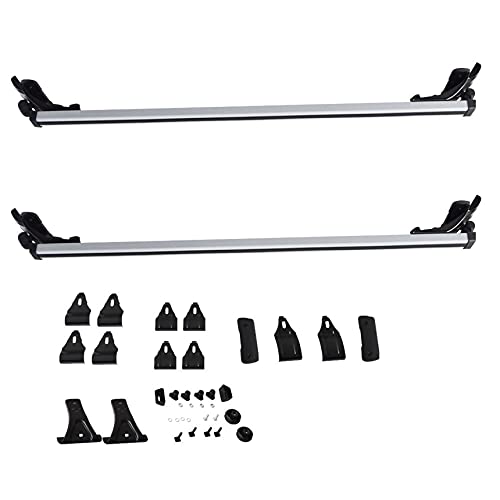
If you would rather have hard crossbars than pads, KUIPERAUTO's aluminum bars are made for cars with a naked roof. The rails are 48 inches long and adjust up to 52 inches, and they fit vehicles with 48 to 53 inches between the rain gutters. Three different clamp widths hook onto the window frames with skid-resistant rubber straps.

The max load is 165 lbs, enough for a kayak and its cradle, and the streamlined shape is designed to cut wind resistance and noise. Rubber pads underneath protect the paint. The package includes the mounting accessories, a manual and gloves. Measure the distance across your roof before ordering, and check your owner's manual for the roof load limit.

What we like
  • Fits naked roofs without rails
  • Adjusts from 48 to 52 inches
  • Three clamp widths included
  • Rubber pads protect paint
Keep in mind
  • Must measure gutter spacing first
  • 165 lb limit is moderate
Check price on Amazon
RainMan S Universal Roof Cross Bar
#7 · Best for heavier loads

RainMan S Universal Roof Cross Bar

RainMan's 48-inch crossbars are listed to fit most vehicles with a naked roof, and the tube construction is listed to hold up to 330 lbs. Three kinds of clamps come with the set to suit different roof shapes, and rubber pads on the bottom keep the bars from damaging the paint.

Once fitted, the bars give you a base for a kayak cradle or a cargo carrier on a car that never came with rails. RainMan recommends professional installation, which adds cost and time compared with strap-on pads. Whatever the bar rating, the roof limit in your owner's manual is the number that counts.

What we like
  • 330 lb listed capacity
  • Three clamp types included
  • Rubber pads protect paint
  • Gives a base for kayak cradles
Keep in mind
  • Professional installation recommended
  • Few fitment details in the listing
Check price on Amazon
Seah Hardware Universal Roof Rack Cross-Bars
#8 · Best for four-door sedans

Seah Hardware Universal Roof Rack Cross-Bars

Seah Hardware's crossbars attach with straps that run through the door frames, which makes them a practical choice for a four-door car without side rails. The heavy-duty steel tubes are 120 cm long and rated for 170 lbs, and attached ratchet tie-downs hold each bar firmly to the roof. Screws and lock nuts are included in the pack.

Be careful not to over-tighten the ratchets, as the listing warns. These bars do not fit two-door cars and are not suitable for MPVs. Seah also says not to install another rack on the bars, so plan to strap your kayak directly to them with padding rather than mounting J-cradles or saddles.

What we like
  • Fits four-door cars without rails
  • 170 lb load capacity
  • Ratchet tie-downs attached
  • Steel tubes with hardware included
Keep in mind
  • Does not fit two-door cars or MPVs
  • Cannot mount add-on kayak racks
Check price on Amazon
Malone VersaRail Bare Roof Cross Rail Rack
#9 · Quietest ride

Malone VersaRail Bare Roof Cross Rail Rack

You don’t have to do anything drastic to transform the roof of your car so that it can allow you to transport your kayak without developing a single scratch in the process. Transporting kayak has never been this easy and the entire credit goes to Malone VersaRail Bare Roof Cross Rail Rack. Malone VersaRail Bare Roof Cross Rail Rack beats its competitors hands down. You can easily increase the surface area on the roof of your car by distributing the suction cups evenly so that the weight gets evenly distributed in the process.

The best thing about Malone VersaRail Bare Roof Cross Rail Rack is that they don’t make much noise during the transportation process.

What we like
  • A wrench is provided hence you need no additional tools for assembly
  • Load bar coating is corrosion resistant
  • Most rack accessories can fit in its rectangular shape
  • Available with a load capacity of 135 lbs, its available with ready to install feature and is delivered absolutely accurate and complete
  • Vacuum tower bases promise a pulling strength of 75 lbs alongside safety attachment straps with a wider dimension of 1.5”.
Keep in mind
  • Suction cups need a clean roof to grip
  • Cups should be rechecked on long drives
Check price on Amazon
HandiRack Universal Inflatable Roof Rack
#10 · Best inflatable option

HandiRack Universal Inflatable Roof Rack

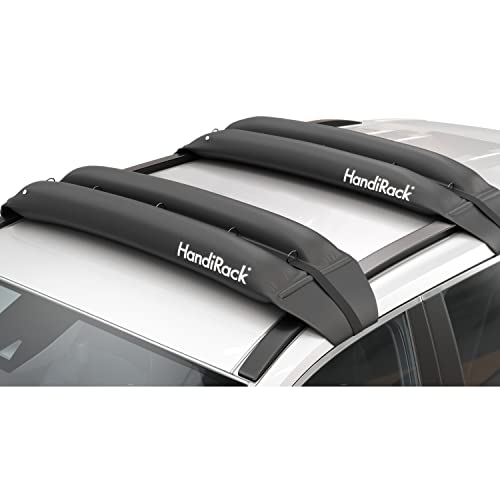
HandiRack takes a different route from foam pads: two twin-tube bladders inflate in seconds with the included HandiPump and sit on the bare roof, cushioning both the kayak and the car. The 400 denier nylon tubes carry up to 80 kg and have five D-ring anchor points. HandiWorld says it is certified for use at highway speeds.

Each kit comes with two rack tubes, two 3-meter tie-down straps, the pump, a manual and a drawstring bag. It moves easily from one car to another, from small hatchbacks to SUVs, which helps households with more than one vehicle. It is not suitable for convertibles or cars fitted with curtain airbags, so check your vehicle before ordering.

What we like
  • Inflates quickly with included pump
  • Moves easily between cars
  • Five D-ring anchor points
  • Certified for highway speeds
Keep in mind
  • Not for cars with curtain airbags
  • Needs inflating before each trip
Check price on Amazon

How to Choose a Kayak Rack for Cars Without Rails

Pads, Inflatable Bars, or Suction Cups

Foam pads are simple and cheap, inflatable bars pack small and adapt to curved roofs, and suction-cup rails create a firmer, bar-like base. Think about how often you carry a kayak and how far you drive. Frequent highway trips may justify a more rigid system, while occasional local paddles suit pads.

How the Straps Attach

Most bare-roof racks secure with straps that run through the cabin and close in the door frames. Check that the straps are long enough for your vehicle and that buckles sit inside the car, not on the paint. Some designs will not fit two-door cars, so confirm compatibility first.

Load Capacity and Roof Limits

Compare the rack's rating with your kayak's weight, then check your owner's manual for the roof's own limit. The lower figure is the one that counts. Heavier fishing kayaks may need a sturdier system, while light recreational kayaks are well suited to pads.

Padding and Security Extras

Wide, firm padding spreads the load and protects both the hull and the roof. Look for anti-slip surfaces that stop the kayak creeping sideways. Bow and stern lines are essential with any bare-roof system, so check whether they come in the box or need to be bought separately.

Transporting a Kayak Without a Roof Rack

Transporting a kayak without roof rack is not rocket science but sometimes people over complicate things and ultimately, everything starts falling apart at the end. Just because your car does not have any roof rack installed, it does not mean that you have to drill a hole on the roof of your car. Nope, there are other ways to transport your kayak. Allow us to break it down for you –

Parts You Will Need

You will need these two parts in order to transport your kayak safely on the roof of your car –

1. Ratchet Straps

Also known as Cam buckle, Ratchet Straps are mainly used for tying things and are equipped with appropriate items to allow you to transport things securely. Cam buckles are usually attached to adjustable buckles and they are primarily made from hard-wearing nylon so that you can place it around the kayak and or any other object for that matter. You need to tighten them up a little bit to keep the object in place during the transportation process.

2. Pool Noodles

Simply put, pool noodles are hollowed cylindrical objects and they are primarily made from polyethylene foam. You can easily spot these pool noodles in any nearby hardware stores. Since they are elastic, you can use them to tie down your kayak on the roof of your car in the absence of rail.

4 Steps To Transport Your Kayak Without A Roof Rail

So, it looks like you have got both the ratchet straps and pool noodles. Now, follow these 4 steps carefully to transport a kayak on the roof of your car even if it does not have a roof rail –

Step 1: Find A Place to Secure the Pool Noodles on The Roof Of Your Car

Pool Noodles are available in different shapes and sizes. Not all Pool Noodles can be used for tying up your kayak. Protruding parts of the pool noodles should be trimmed carefully once you have placed them across the roof of the car. Pool noodles create the base on which you can place your kayak and they will keep your kayaks from harm’s way during the transportation process. Maintain a distance of at least 3 feet between one pool noodle and another so that they can protect your kayak from abrasion.

Now you might be wondering how many Pool Noodles your car needs. Well, it all boils down to one thing and that is the approximate size of the roof the vehicle. So, the pool noodles are attached to the roof, securely right? Well, that is reassuring. Now, in the next step, you will have to run a Cam buckle through the open door of your car and then stretch it through the hole of the pool noodle.

Step 2: Place The kayak on the Top of Pool Noodle

In the next step, you will have to lift the kayak and place it on the top of your vehicle. Now, if the kayak is heavy, you might have to ask your buddy to give you a hand. The kayak should be placed face down. Don’t worry, pool noodles are there to keep your kayak safe from all the damages.

Step 3: Use Straps to Tie Down Your Kayak

In this stage, we will have to open the front and rear door of our cars and then run one end of the ratchet strap over the kayak. Now, the straps should be attached to one another inside the vehicle. The straps should be twisted a little bit otherwise you might have to deal with a lot of noise while driving. This step should be repeated for both the front and rear sides of the kayaks.

Step 4: Secure the Bow and Stern

Now, we have already stopped the kayak from making side to side movements during the transport by using the straps, we will have to make sure that the kayak does not slide down in the front or the back. Use ratchet straps and attach its one end to the carry handle of the kayak and attach the other end to the car’s tie-down spot. Do the same for the rear and everything will be just fine.

Frequently asked questions

Can I carry a kayak on a car with no roof rails?

Yes. Foam pads, inflatable bars, and suction-cup rails all let you carry a kayak on a bare roof. Most pad and inflatable systems use straps that pass through the cabin and close in the door frames. They work well for occasional trips, but always add bow and stern lines and check your owner's manual for roof load guidance.

Will straps through the doors cause leaks or wind noise?

Flat straps usually let the doors close normally, though they may create a little wind noise and press on the rubber seals over time. Twisting the strap once inside the cabin can quiet humming outside. Check the seals after long trips, and avoid running straps across sharp metal edges.

How fast can I drive with a kayak on roof pads?

Follow the maker's speed guidance for your specific pads or bars, since it varies. In general, soft racks are best for moderate speeds and shorter drives. Strap the kayak tightly, add bow and stern lines, and stop after a few miles to recheck. Slow down in strong crosswinds.

More guides like this

Abahub 32-Inch Soft Roof Rack PadsOur top pickAbahub 32-Inch Soft Roof Rack PadsCheck price